




April 1, 2026

April 1, 2026
Protected:
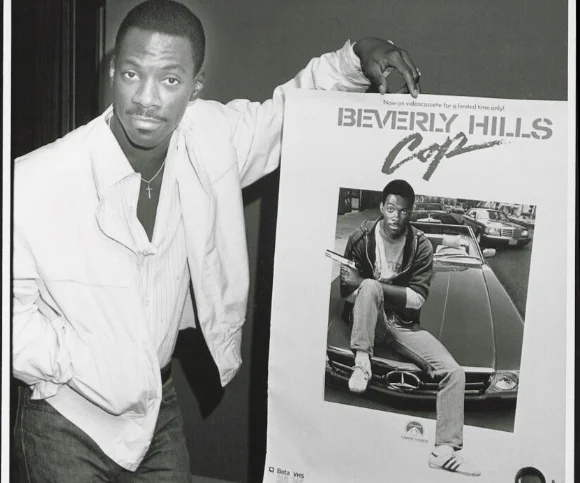
BEVERLY HILLS COP – AFI Catalog Spotlight

This month, AFI honors Eddie Murphy with the 51st AFI Life Achievement Award, the highest honor for a career in film.
Murphy’s life and career will be celebrated at a gala ceremony in Hollywood on April 18. In recognition of Murphy’s enduring impact on popular culture, the AFI Archive and AFI Catalog have drawn from their collections to explore the making of one of his most iconic films, BEVERLY HILLS COP (1984), and trace his evolution from stand-up comic to a Hollywood powerhouse.
Murphy became a defining figure in American film in the early 1980s with his first two movies, 48 HRS. (1982) and TRADING PLACES (1983). In 1984, BEVERLY HILLS COP launched him into superstardom.
Screenwriter Daniel Petrie, Jr., participated in an AFI seminar in 2001, in which he briefly recalled the early stages of BEVERLY HILLS COP.



Screenwriter Daniel Petrie, Jr., participated in an AFI seminar in 2001, in which he briefly recalled the early stages of BEVERLY HILLS COP.
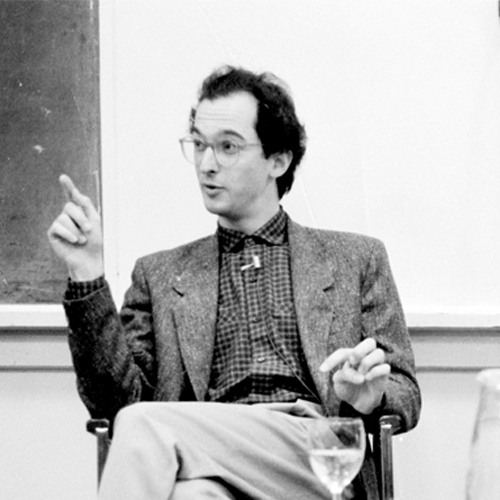
Director Martin Brest returned to AFI in February 1985 to discuss the making of BEVERLY HILLS COP with AFI Conservatory Fellows.
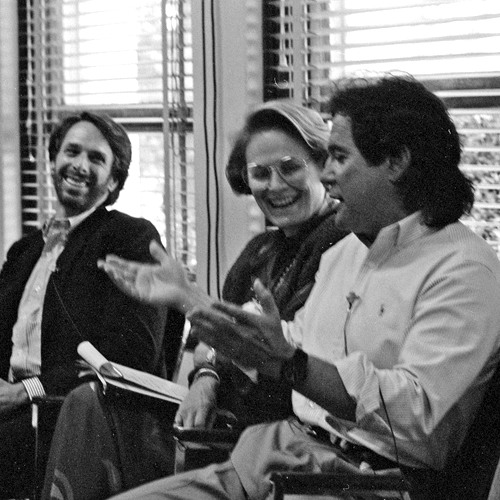
The AFI Archive preserves a recording from April 1988 featuring producers Don Simpson and Jerry Bruckheimer
Simpson and Bruckheimer describe the development and casting process, including hiring director Martin Brest.


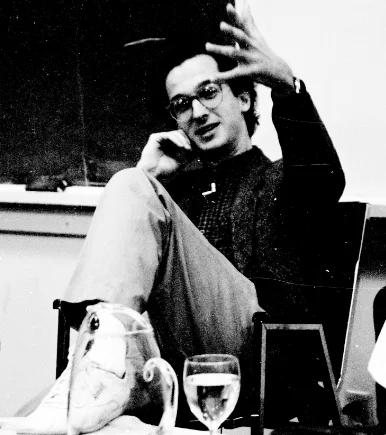
Directed by AFI Alum Martin Brest and written by AFI Trustee Emeritus Daniel Petrie, Jr., BEVERLY HILLS COP was co-produced by Murphy’s own production company alongside Don Simpson and Jerry Bruckheimer.
The AFI Catalog documents that the story for BEVERLY HILLS COP was conceived in 1975 by Michael Eisner, President of Paramount Pictures at the time.
In his early days in Los Angeles, Eisner reportedly drove a shabby station wagon he had purchased in New York. After being pulled over by a Beverly Hills police officer for a traffic violation and treated disrespectfully because of the condition of his car, he became acutely aware of Hollywood’s wealth disparity and materialistic elitism. The experience inspired him to develop the concept as a dramatic comedy.
Eisner was displeased with the early adaptations of his story until September 1983, when newcomer Daniel Petrie, Jr., presented his debut screenplay for BEVERLY HILLS COP. The script ultimately earned Petrie an Oscar® nomination.
As the project moved forward, Eisner favored actor Mickey Rourke for the lead, but script rewrites delayed production, and Rourke left to star in THE POPE OF GREENWICH VILLAGE (1984). Although Sylvester Stallone was attached to the picture for a time, he rewrote much of the story as an action movie, which would have inflated the budget by $2 million.
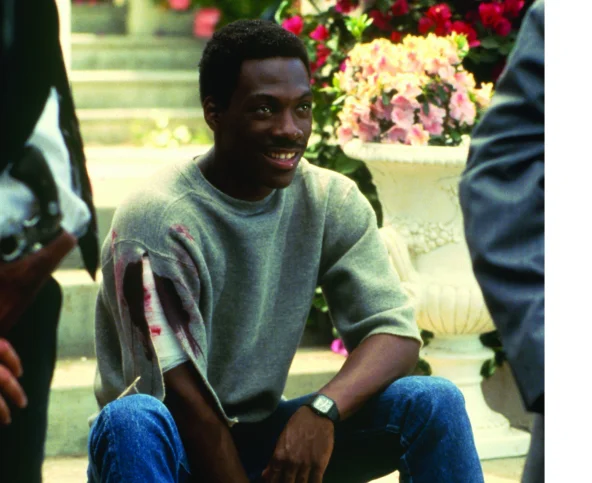
After the producers decided against Stallone’s version, the actor went on to use his script as source material for the film COBRA (1986). In April 1984, Eddie Murphy’s casting in BEVERLY HILLS COP was announced as part of an existing five-picture deal at Paramount that included an ”in association with” credit for Eddie Murphy Productions. The lead character’s name was changed from Axel Cobretti to Axel Foley, and filming began roughly three weeks later in Los Angeles and Detroit. The New York Times reported that the script was not finished until the first day of shooting, and it was continually revised due to the improvisational nature of Murphy’s work. Completed on a modest budget for a major studio release, the film went on to earn more than $19 million in its opening weekend in early December 1984.
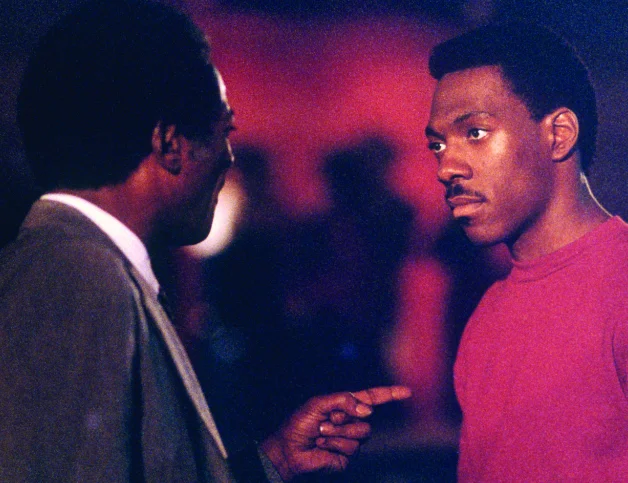
BEVERLY HILLS COP became the biggest box office hit of 1984, topping GHOSTBUSTERS, INDIANA JONES AND THE TEMPLE OF DOOM, GREMLINS and THE KARATE KID. With more than $233 million at the box office, the film remained the highest-grossing R-rated comedy for a quarter century until THE HANGOVER surpassed it with roughly $277 million in 2009.
In 2024, 40 years after the release of BEVERLY HILLS COP, the movie was selected for preservation by the National Film Registry of the U.S. Library of Congress, acknowledging its “cultural, historic or aesthetic significance.” This marked the first time an Eddie Murphy feature film appeared on the Registry. On its induction into the prestigious register, Essence Magazine reported on the achievement for African American artists and audiences, noting: “The film’s success paved the way for future generations of Black actors and filmmakers to claim their space in mainstream cinema.”
Today, the BEVERLY HILLS COP franchise remains one of the highest-grossing comedy series of all time, earning well over $1 billion, and the film is included on AFI’s 100 YEARS…100 LAUGHS list of the funniest American movies of all time.

The AFI Archive is an ongoing program which adds countless new items each year, including exclusive conversations with acclaimed filmmakers and performers captured at AFI, and is on the forefront of state-of-the-art digitization efforts ensuring the stories of today are protected for future generations.
Support the AFI Archive and AFI Catalog to protect the history of film.
Comments (0)




Donate today and join the nation’s strongest community of film lovers.
AFI is a 501c3 non-profit advancing the art of the moving image by empowering storytellers and inspiring audiences
