




May 1, 2026
May 1, 2026
Protected:
NIGHT ON EARTH – AFI Catalog Spotlight

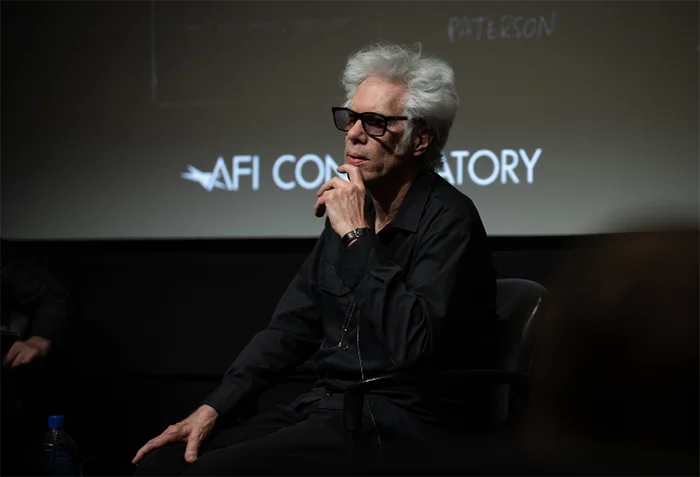
This month, AFI shines a spotlight on NIGHT ON EARTH, the tour de force anthology film which was released nationwide this month in 1992. AFI recently screened the film for Fellows of the AFI Conservatory, followed by an intimate conversation with Jim Jarmusch.
Written, directed and produced by Jarmusch, NIGHT ON EARTH was shot by AFI Alum Frederick Elmes, marking the beginning of a long creative partnership. Elmes’s work as director of photography on NIGHT ON EARTH helped redefine how stories set in moving vehicles could be filmed, turning every day, in-between moments into cinematic experiences. He earned his second Independent Spirit Award for his work on the film (his first was for AFI Alum David Lynch’s WILD AT HEART).
AFI has drawn from primary sources in the AFI Archive and the AFI Catalog to highlight Elmes’s contributions to film. These materials trace his career from his early work at AFI with David Lynch and numerous filmmakers in the AFI Directing Workshop for Women (DWW+), to his breakthrough photography on NIGHT ON EARTH and his collaborations with seminal independent filmmakers including John Cassavetes, Ang Lee and Martha Coolidge.
As documented in the AFI Catalog, prior to NIGHT ON EARTH, scenes set in moving vehicles were typically shot on set using process photography or with automobiles placed on flatbed trailers. However, for this film, Elmes and Jarmusch instead chose to film on location at night across five cities during winter, all while being restricted to a budget of $3.5 million.
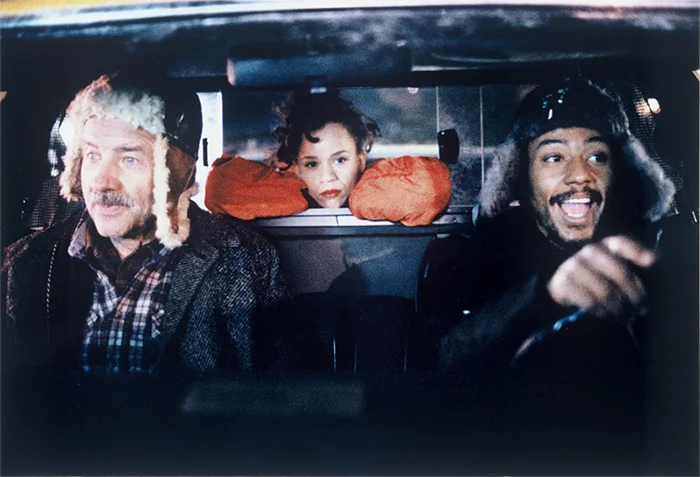
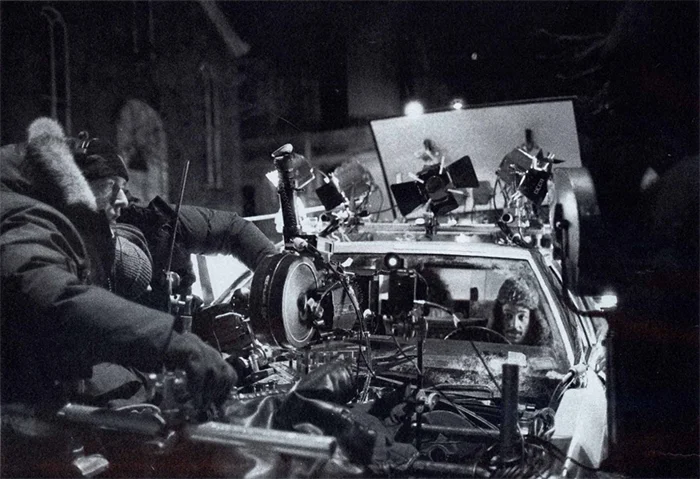
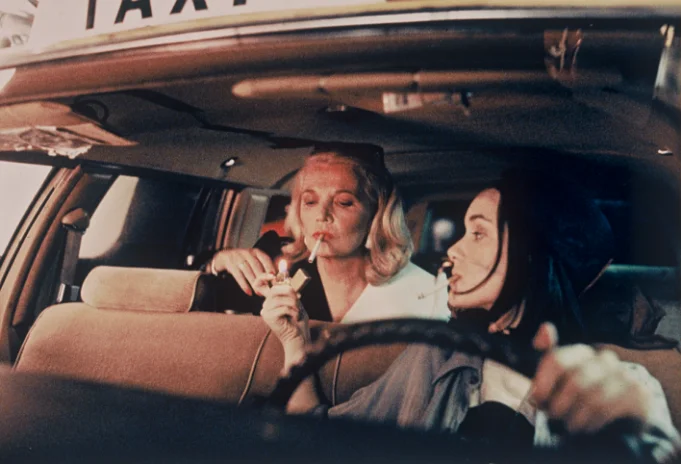
Across the five cities – Los Angeles, New York, Paris, Rome and Helsinki – a team of six filmmakers was required to train local crews, often with help from translators, to operate two identical taxis. One was used for exterior shots, while the other was modified with a rooftop lighting rig and speedrails around the outside of the car with its engine removed. Elmes and his assistants were strapped into the empty engine compartment while the car was towed by a pickup truck, which also carried Jarmusch as he directed using an improvised intercom system and walkie-talkies.
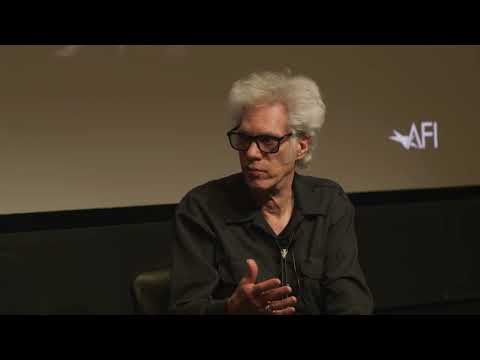
In a 2026 AFI seminar, Jim Jarmusch reflects on his creative partnership with Fred Elmes–from their first meeting in Los Angeles to his approach to filmmaking and the distinctive method Elmes brought to their collaborations.

Preserved in the AFI Archive’s collection of American Cinematographer magazines, an article in the June 1992 issue about NIGHT ON EARTH noted that Elmes began as a still photographer hoping to become a photojournalist while studying at the Rochester Institute of Technology. A stint as a projectionist for a foreign film program gave Elmes new insights into the narrative possibilities of moving images, and he completed post-graduate work in film at NYU before moving west to attend the Center for Advanced Film Studies at AFI (now the AFI Conservatory). There, he met David Lynch, who was also enrolled and working on his feature film debut, ERASERHEAD. Elmes replaced the cinematographer who left the project.
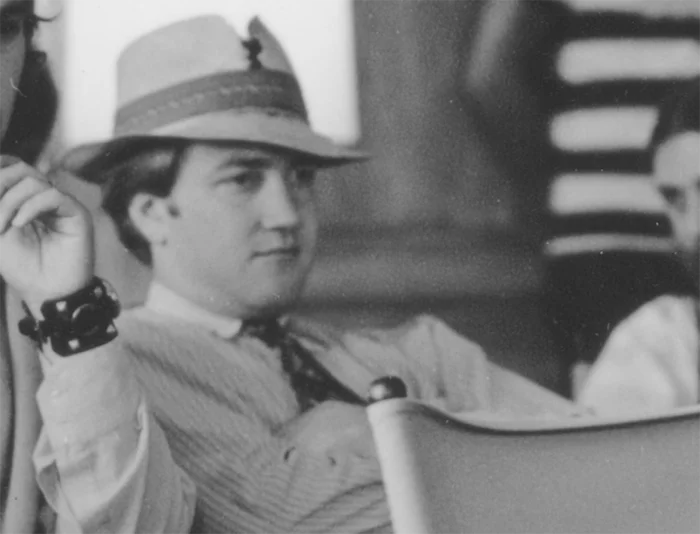
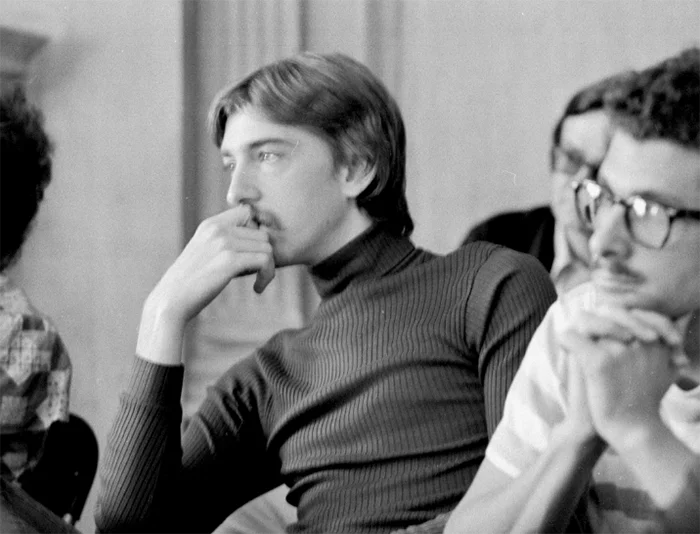
During the five-year production of ERASERHEAD, Elmes also worked as a cameraman on three John Cassavetes films, including A WOMAN UNDER THE INFLUENCE (1974) starring Gena Rowlands. Rowlands later appeared in NIGHT ON EARTH, returning to the screen after Cassavetes’s death in 1989.
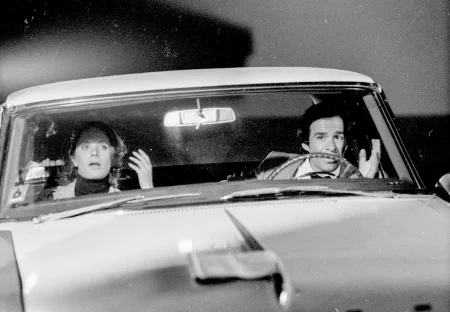
The 1970s proved to be extremely productive years in Elmes’s early career. Along with his contributions to the Cassavetes pictures, Elmes photographed three AFI Thesis films and six shorts directed by women in the AFI Directing Workshop for Women, including Ellen Burstyn, Dyan Cannon, Anne Bancroft and Sandra Weintraub. All these films are preserved in the AFI Archive. Shortly after receiving his first director of photography credit on Martha Coolidge’s inaugural feature, VALLEY GIRL (1983), Elmes returned to AFI in 1984 to shoot another DWW+ production directed by Jenny Sullivan. That same year, he reunited with Lynch as an additional unit cinematographer on DUNE (1984), and that partnership led to Elmes’s role as director of photography on Lynch’s BLUE VELVET (1986) and WILD AT HEART (1990). These two films attracted the attention of Jim Jarmusch and prompted him to recruit Elmes for NIGHT ON EARTH.
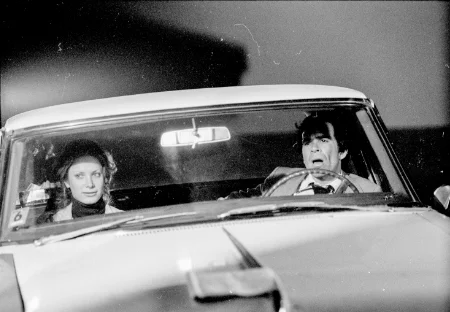
Production stills from Ellen Burstyn’s DWW+ film SNATCHMAN (1974), 1974. AFI ARCHIVE.
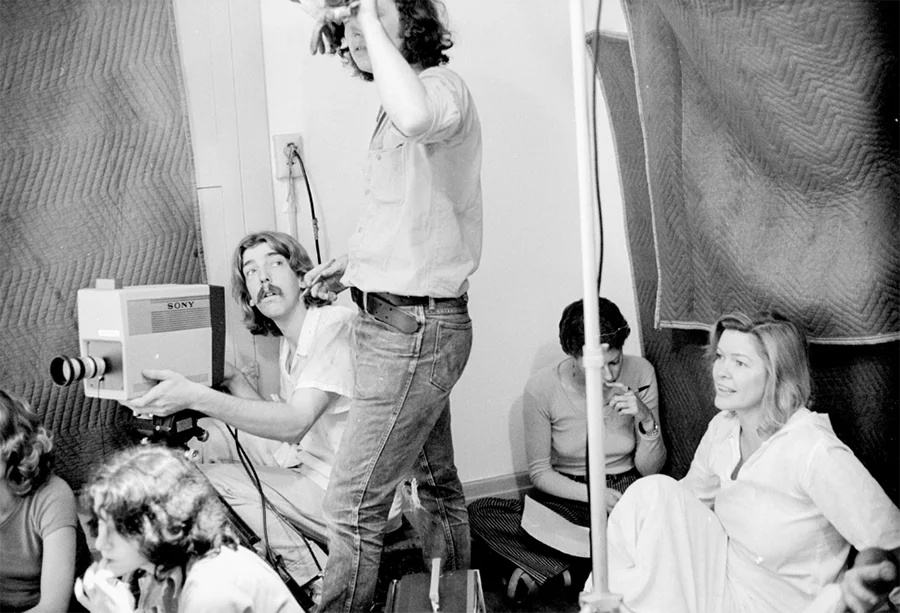
Elmes (left, holding camera) on set of the DWW+ film SNATCHMAN with Amy Heckerling (lower left) and director Ellen Burstyn (far right). AFI ARCHIVE.
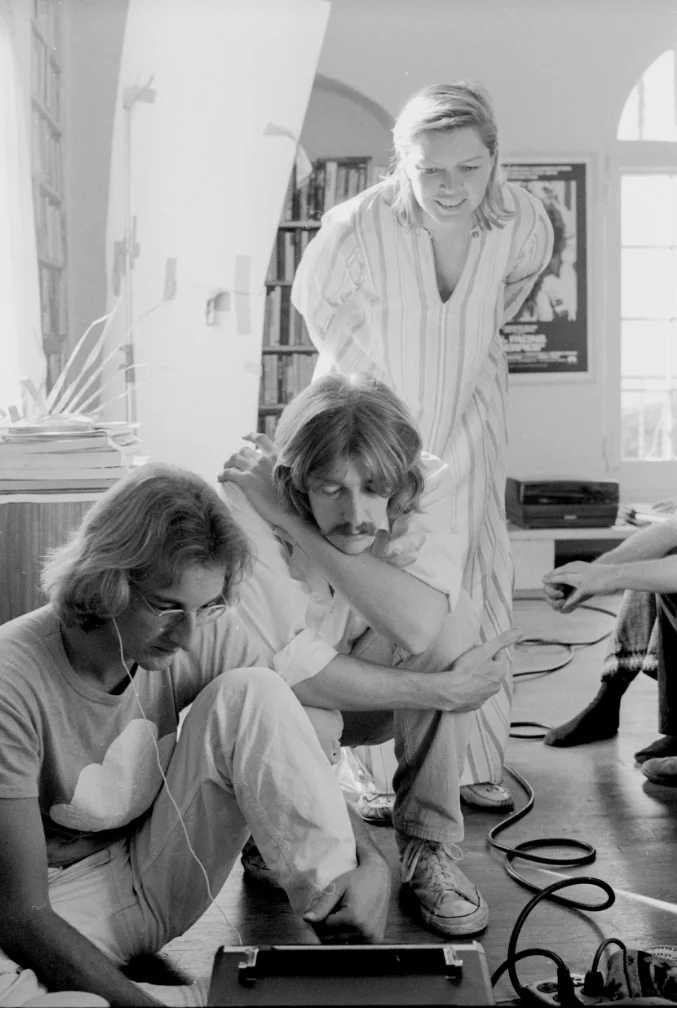
An unidentified crew member, Elmes, and Ellen Burstyn on the set of SNATCHMAN. AFI ARCHIVE.
With over 30 feature films to his credit, along with numerous television projects, Elmes has consistently worked throughout the past five decades, notably filming three features by Oscar®-winning director Ang Lee, including THE ICE STORM (1997); six Jim Jarmusch pictures, most recently FATHER MOTHER SISTER BROTHER (2025), which premiered at the Venice Film Festival and received the highest honor of the Golden Lion; the directorial debut of Oscar®-winning, AFI Life Achievement Award recipient actress Diane Keaton in her documentary about the afterlife in HEAVEN (1987); and two Tim Hunter pictures starting with RIVER’S EDGE (1987), which reportedly inspired David Lynch to make his television sensation TWIN PEAKS (1990–1991). Elmes received the AFI Franklin J. Schaffner Alumni Medal in 2017 and the American Society of Cinematographers (ASC) Lifetime Achievement Award in 2020.
In an interview with Jarmusch about NIGHT ON EARTH, he explained that the film represents mundane moments in life that are typically excised from stories, and taken for granted by most viewers, stating:
“If you think about taking a taxi, it’s something insignificant in your daily life; in a film when someone takes a taxi, you see them get in, then there’s a cut, then you see them get out. So, in a way, the content of this film is made up of things that would usually be taken out.”
In this way, Fred Elmes was challenged to photograph glimpses of life that are rarely examined onscreen, with little source material to draw from. Similarly, Elmes developed technological solutions to meet the complex demands of the production – shooting at night, on location, in freezing weather, with minimal crews who often spoke different languages, all within the confines of moving vehicles. Through his work on NIGHT ON EARTH, Elmes successfully captured five stories on film without drawing attention to the camera, allowing the audience to enter the world projected on screen and entertain it as a brief and collectively held “reality.”

When Elmes was honored with the ASC Lifetime Achievement Award, Jarmusch reflected on Elmes’s unique capacity to balance creative vision with practical applications of camera work:
“Fred’s aesthetic sense is highly sophisticated, but he also has a very technical mind, and those two things are in perfect balance… One of my Native American friends calls it ‘going down the river with your feet in different canoes.’”

The AFI Archive is an ongoing program which adds countless new items each year, including exclusive conversations with acclaimed filmmakers and performers captured at AFI, and is on the forefront of state-of-the-art digitization efforts ensuring the stories of today are protected for future generations.
Support the AFI Archive and AFI Catalog to protect the history of film.
Comments (0)




Donate today and join the nation’s strongest community of film lovers.
AFI is a 501c3 non-profit advancing the art of the moving image by empowering storytellers and inspiring audiences
