




March 2, 2026
March 1, 2026
Protected:
AFI Catalog Spotlight – Cleo Madison
In honor of Women’s History Month, the AFI Catalog shines a spotlight on actress and director Cleo Madison, a pioneer in early American filmmaking and one of many women who helped shape the industry in its formative years through work across all areas of production.
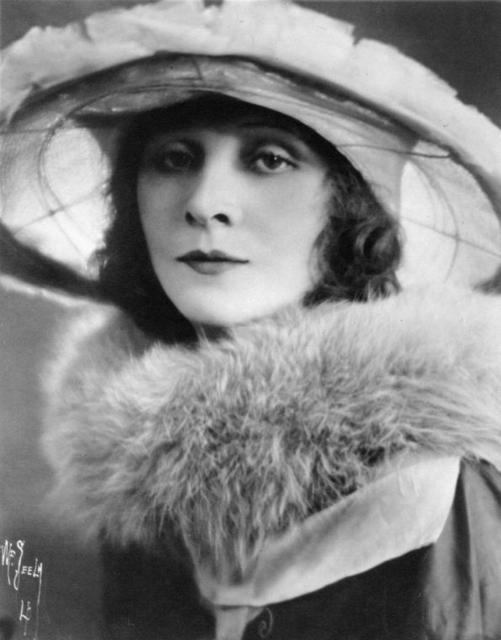
At Universal, Cleo Madison was not only a star, but one of nearly a dozen women who were hired by Universal co-founder Carl Laemmle to direct roughly 200 motion pictures in the 1910s. For a brief period in film history, the studio provided a unique setting in which women directors were able to shape significant bodies of work.
Scholarship on women filmmakers of the silent era has gained renewed attention in recent years, including through Columbia University’s Women Film Pioneer Project and AFI’s Women They Talk About and Behind the Veil. These efforts build upon Anthony Slide’s groundbreaking book “The Silent Feminists” (1977) and Mark Garrett Cooper’s later study “Universal Women: Filmmaking and Institutional Change in Early Hollywood” (2010) to name a few. Still, Cleo Madison and her contemporaries at Universal, including Lois Weber (at the time, the highest paid director in Hollywood),i Ida May Park, Ruth Stonehouse and Lule Warrenton, among others, have been largely overlooked in the historical record. By exploring a few aspects of Cleo Madison’s life and films, AFI seeks to illuminate her story and spark new interest in her impact as a director in the 1910s.
Madison was reportedly one of the busiestii women at Universal, but her work has not received the same attention as Weber, who has been the subject of several books including Slide’s “Lois Weber: The Director Who Lost Her Way in History” (1996) and Shelley Stamp’s “Lois Weber in Early Hollywood” (2015). The difference in the directing credits for both women, as recorded in the AFI Catalog, is notable. Weber helmed around 100 shorts and 36 features, while Madison directed 16 shorts and two features, although their acting credits are far more comparable. Many production roles went uncredited, and standardized onscreen credits did not become common practice until the late 1920s, when women were already being phased out of leadership positions behind the camera.
Although it is documented in Slide’s work and other sources that Cleo Madison was born Lulu Bailey in March 1883, the certificate for her short-lived marriage in 1916 lists her age as 27, suggesting either a later birth date or that she understated her age.iii Some sources also conflict on whether she was born in Bloomington, Illinois or Bloomington, Indiana.iv Madison was devoted to her wheelchair-bound sister, Helen Bailey, who lived with her and may have authored several scenarios for Universal under the name Grace Helen Bailey.v
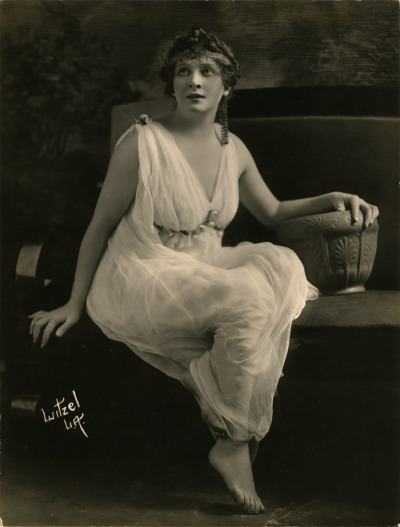
Madison became a star after performing the role of twin sisters in the blockbuster serial THE TREY O’HEARTS (1914) and was contracted as a director at Universal the following year.
All of Madison’s 18 known director credits, including the features A SOUL ENSLAVED (1916) and HER BITTER CUP (1916), were completed between 1915-1916. The brevity of her directing career has prompted speculation about Madison’s commitment to the craft, particularly because she married in 1916. Madison was also a strong advocate for equal rights at a time when women remained disenfranchised. A 1916 Photoplay profile described her as “lovely but militant,” writing that “[with Madison] at their head, the suffragettes could capture the vote of their sex and smash down the opposition as easily as shooting fish in a bucket.”vi Photoplay further noted that Madison differed greatly in person from the characters she portrayed onscreen, stating “to see her in pictures tells you absolutely nothing about her real character.”vii
Watch Cleo Madison starring in and directing one of her two extant films, ELEANOR’S CATCH (1916)
Although aspects of Cleo Madison’s life remain difficult to reconstruct, contemporary accounts suggest she was committed to challenging the status quo and promoting gender equality. As she told Photoplay, “One of these days, men are going to have to get over the idea that women have no brains… and I don’t believe that day is very far distant, either.”viii
Explore Madison’s filmography at the AFI Catalog here.
iPhotoplay, as quoted in Stamp, Shelley. “Lois Weber.” In Jane Gaines, Radha Vatsal, and Monica Dall’Asta, eds. Women Film Pioneers Project. New York, NY: Columbia University Libraries, 2013. <https://doi.org/10.7916/d8-zsv8-nf69>
ii Slide, Anthony.The Silent Feminists: America’s First Women Directors. New York: Rowman and Littlefield, 1977.
iii Cooper, Mark Garrett. “Cleo Madison.” In Jane Gaines, Radha Vatsal, and Monica Dall’Asta, eds. Women Film Pioneers Project. New York, NY: Columbia University Libraries, 2013. <https://doi.org/10.7916/d8-kfn3-q031>
iv Ibid.
v Ibid.
vi Henry, William M. “Cleo, the Craftswoman.” Photoplay, January 1916.
vii Ibid.
viii Ibid.
Comments (0)


Donate today and join the nation’s strongest community of film lovers.
AFI is a 501c3 non-profit advancing the art of the moving image by empowering storytellers and inspiring audiences
