




February 3, 2026
February 3, 2026
Protected:
TAXI DRIVER – AFI Catalog Spotlight
In celebration of TAXI DRIVER’s 50th anniversary, AFI highlights exclusive materials from the AFI Archive and the AFI Catalog that document the history and making of the film.
These two world-renowned resources reflect AFI’s ongoing commitment to preserving film history for future generations.
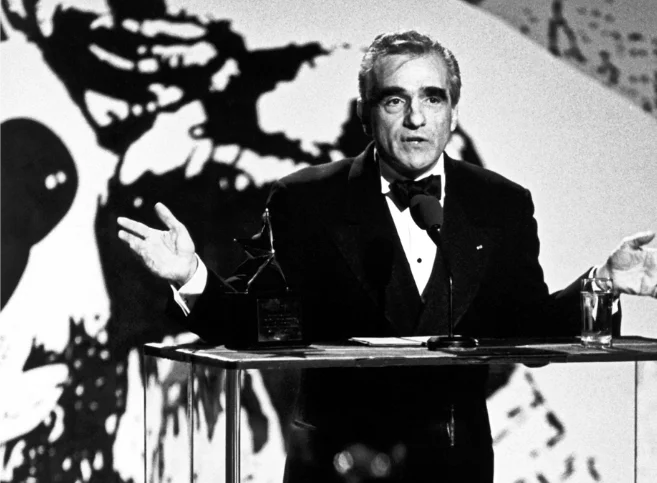
Directed by Martin Scorsese, the recipient of the 25th AFI Life Achievement Award, TAXI DRIVER appears on five of AFI’s 100 lists, including AFI’s 100 YEARS…100 MOVIES, which ranks the greatest American films of all time.
While TAXI DRIVER has generated widespread scholarship and critical analysis, few stories have been told about the physical objects and digital assets in the AFI Collection. This article explores several intersections between AFI Catalog data and AFI Archive holdings as a sampling of the Institute’s abundant opportunities for both upholding and expanding upon the canon.
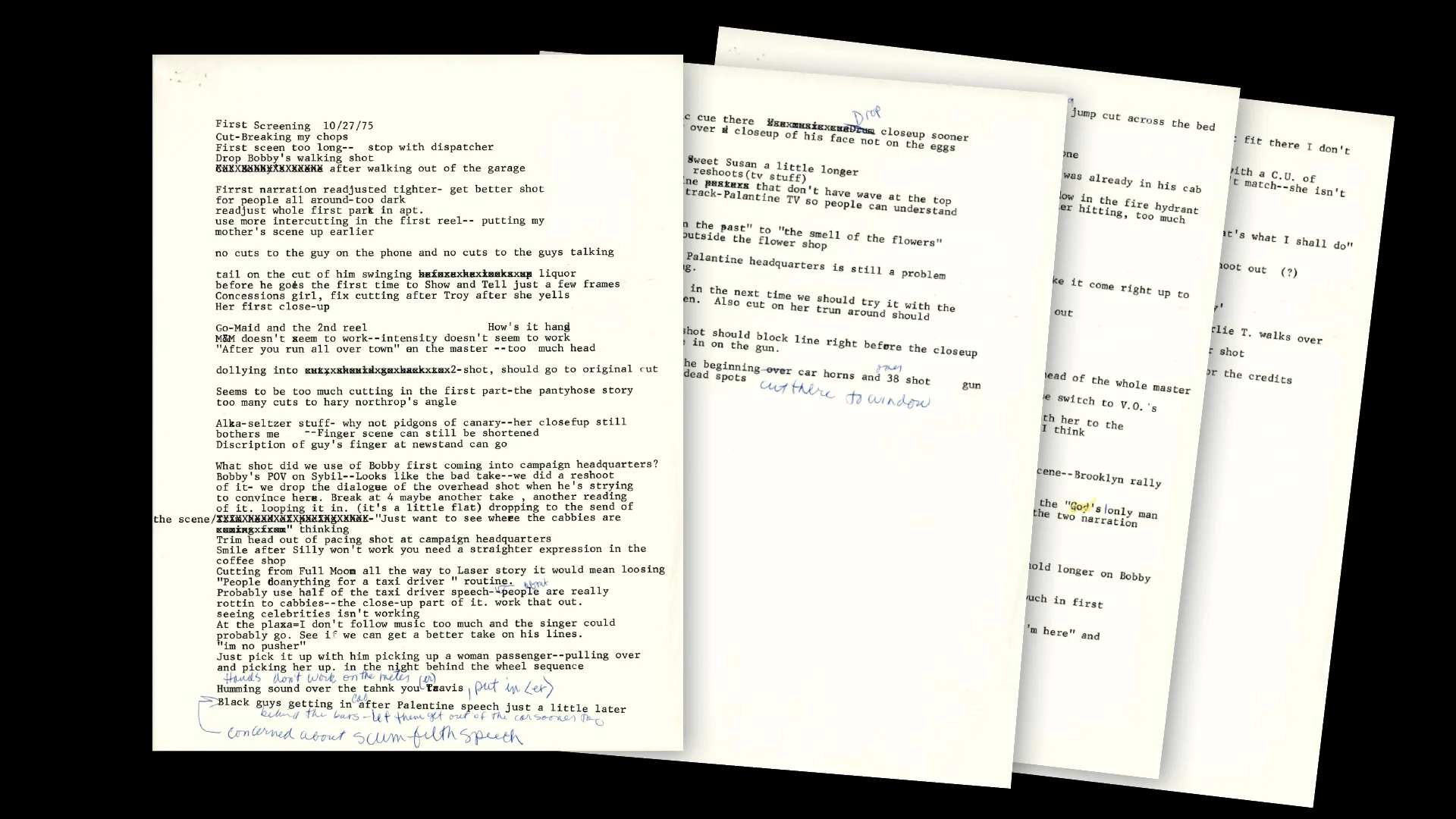
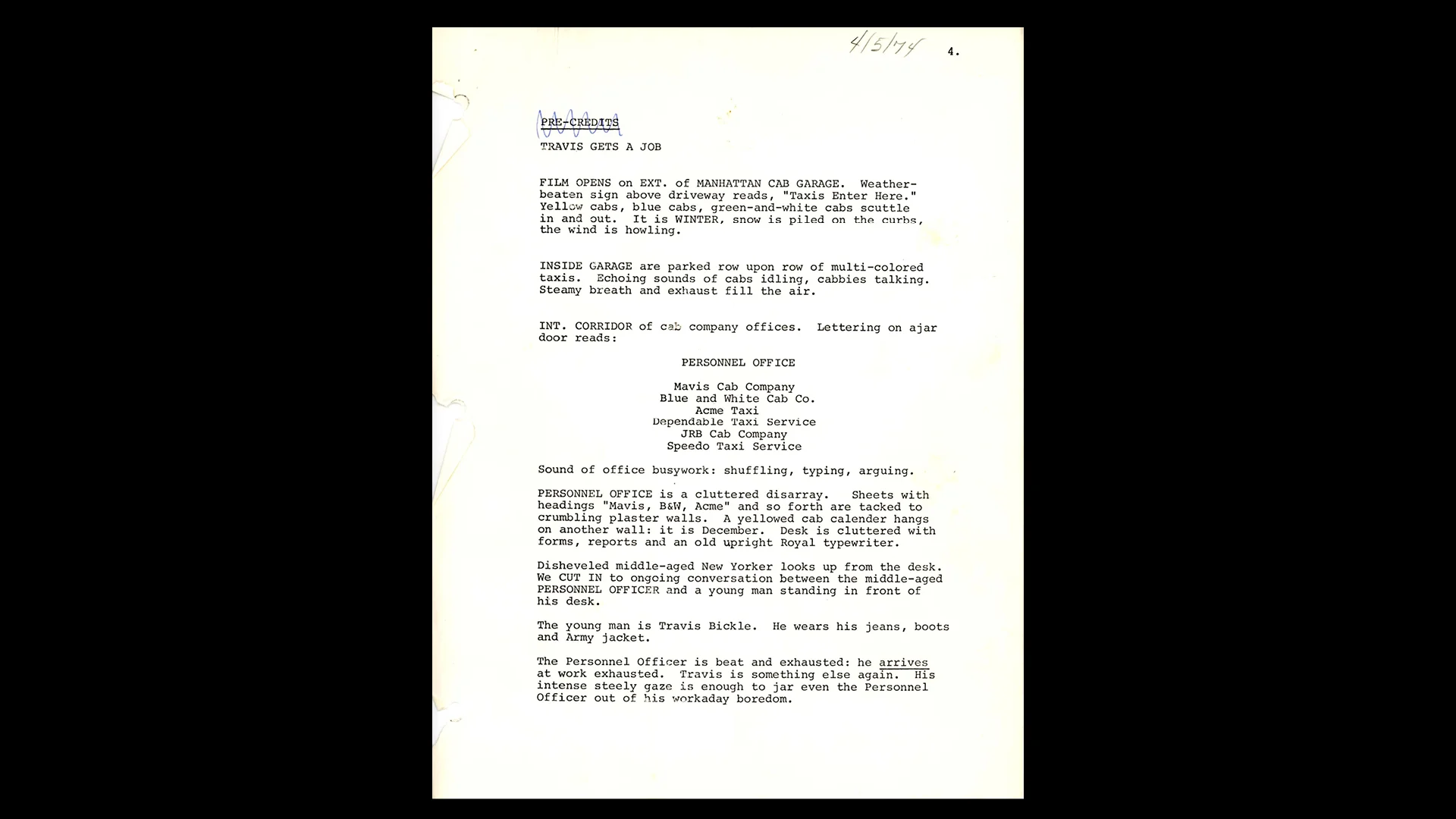
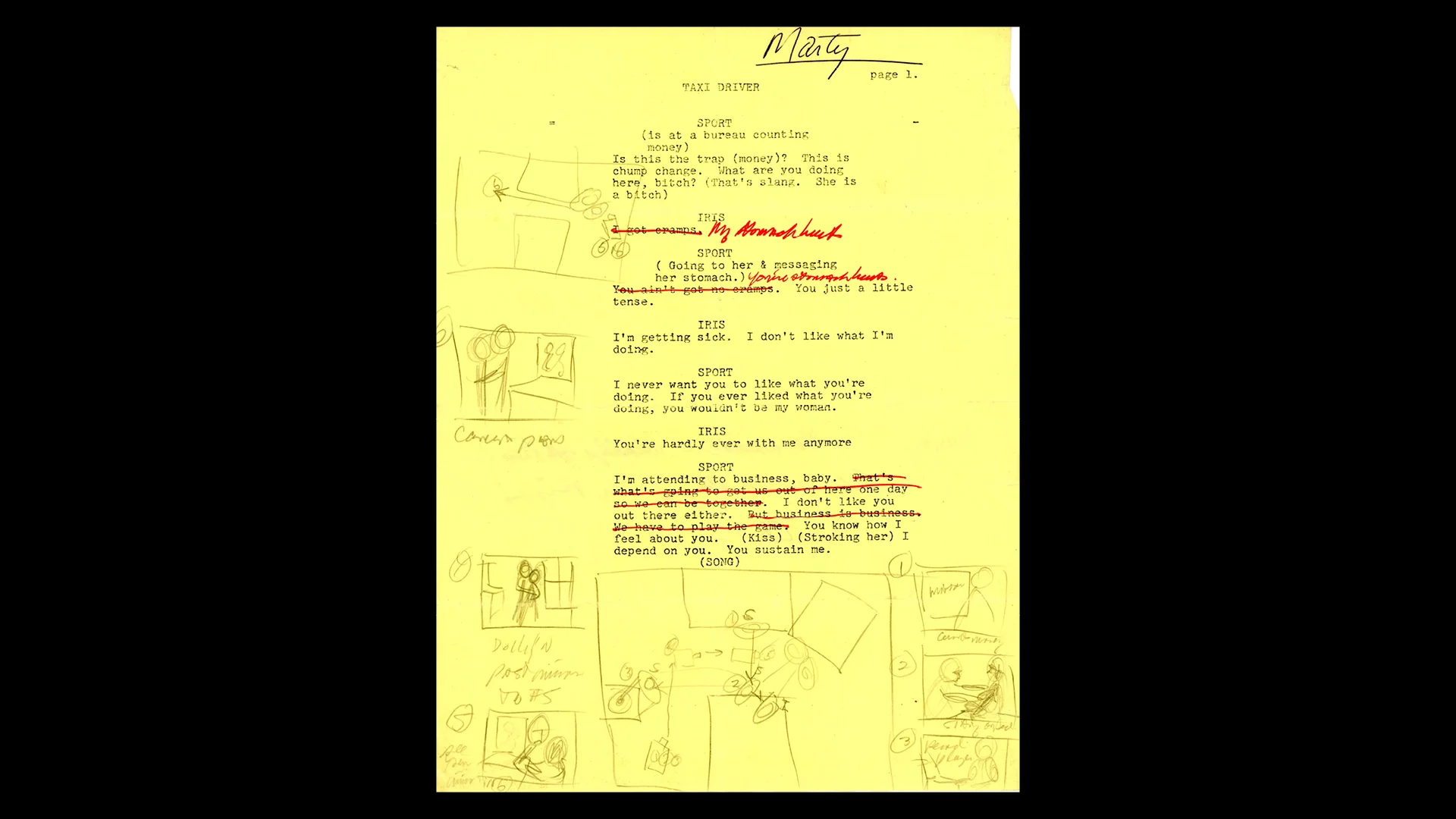
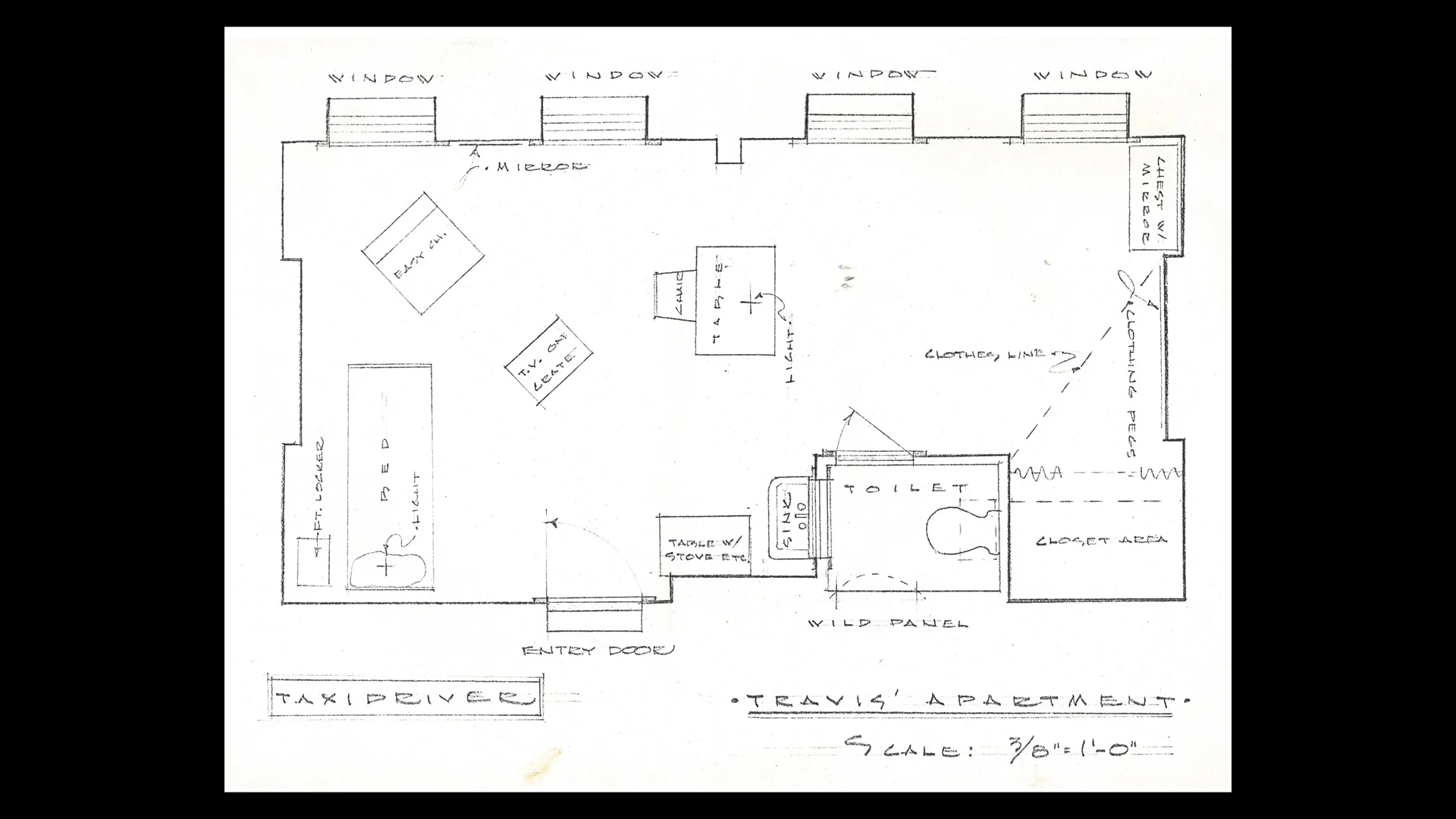
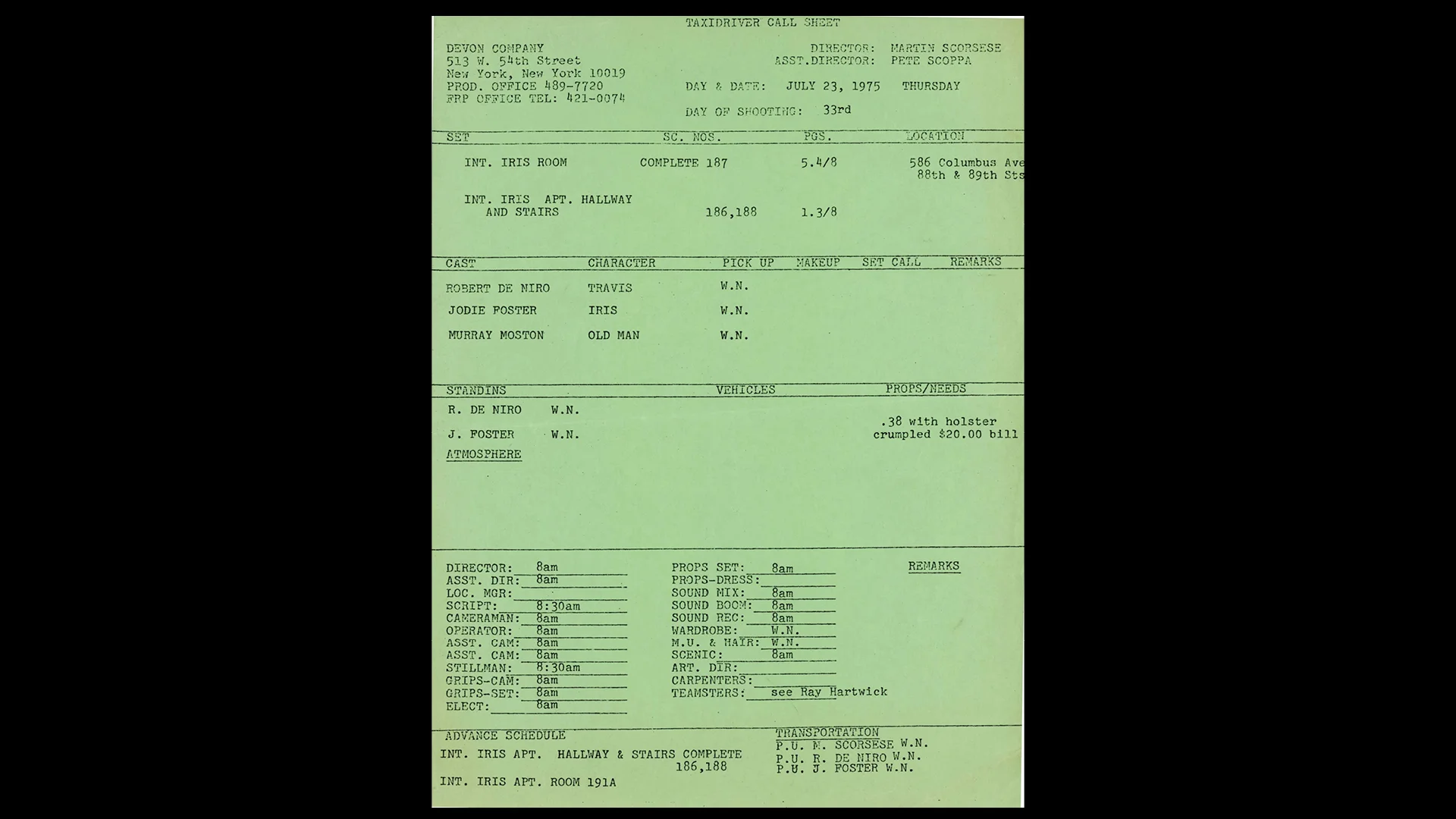
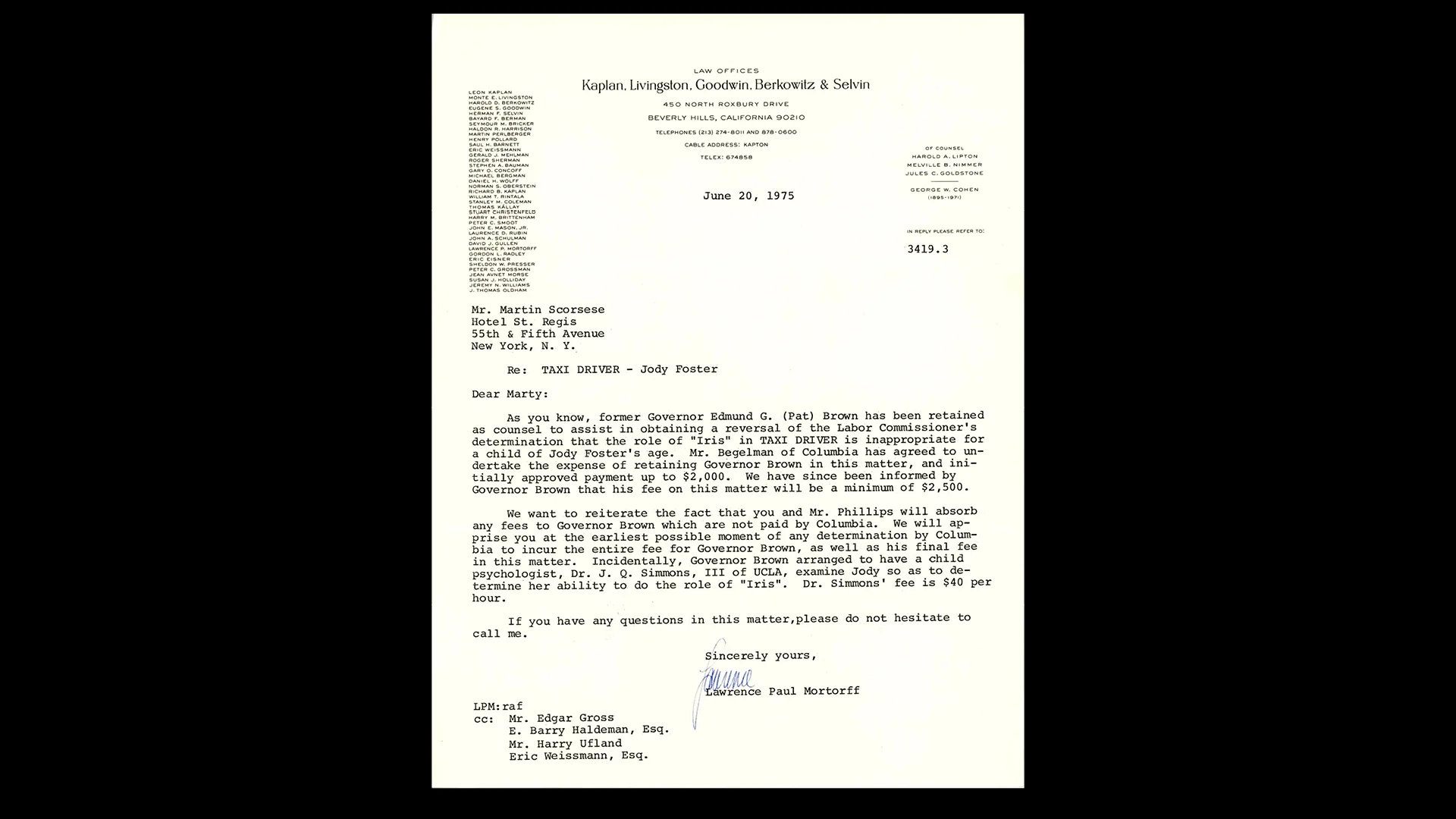
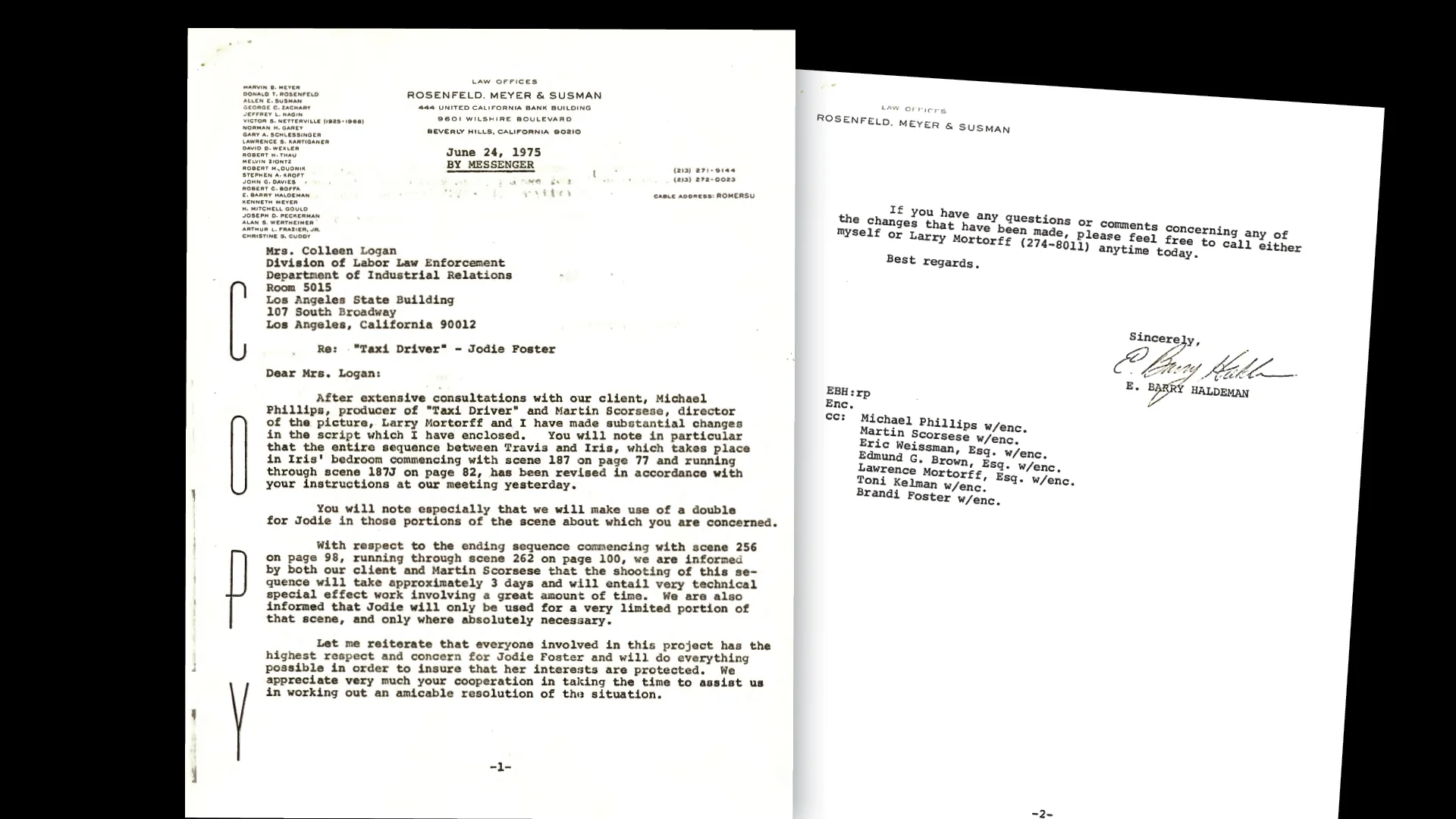
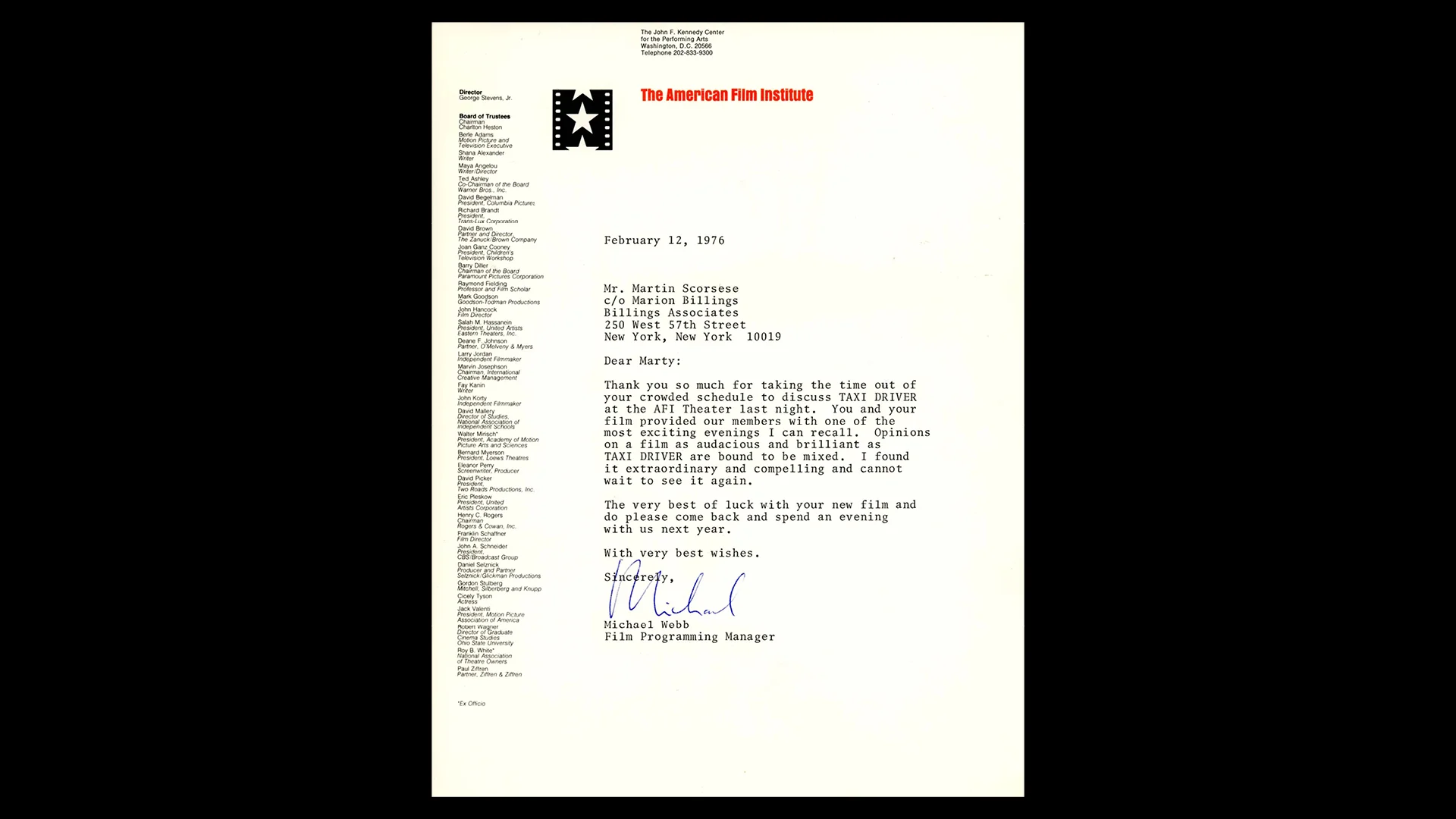
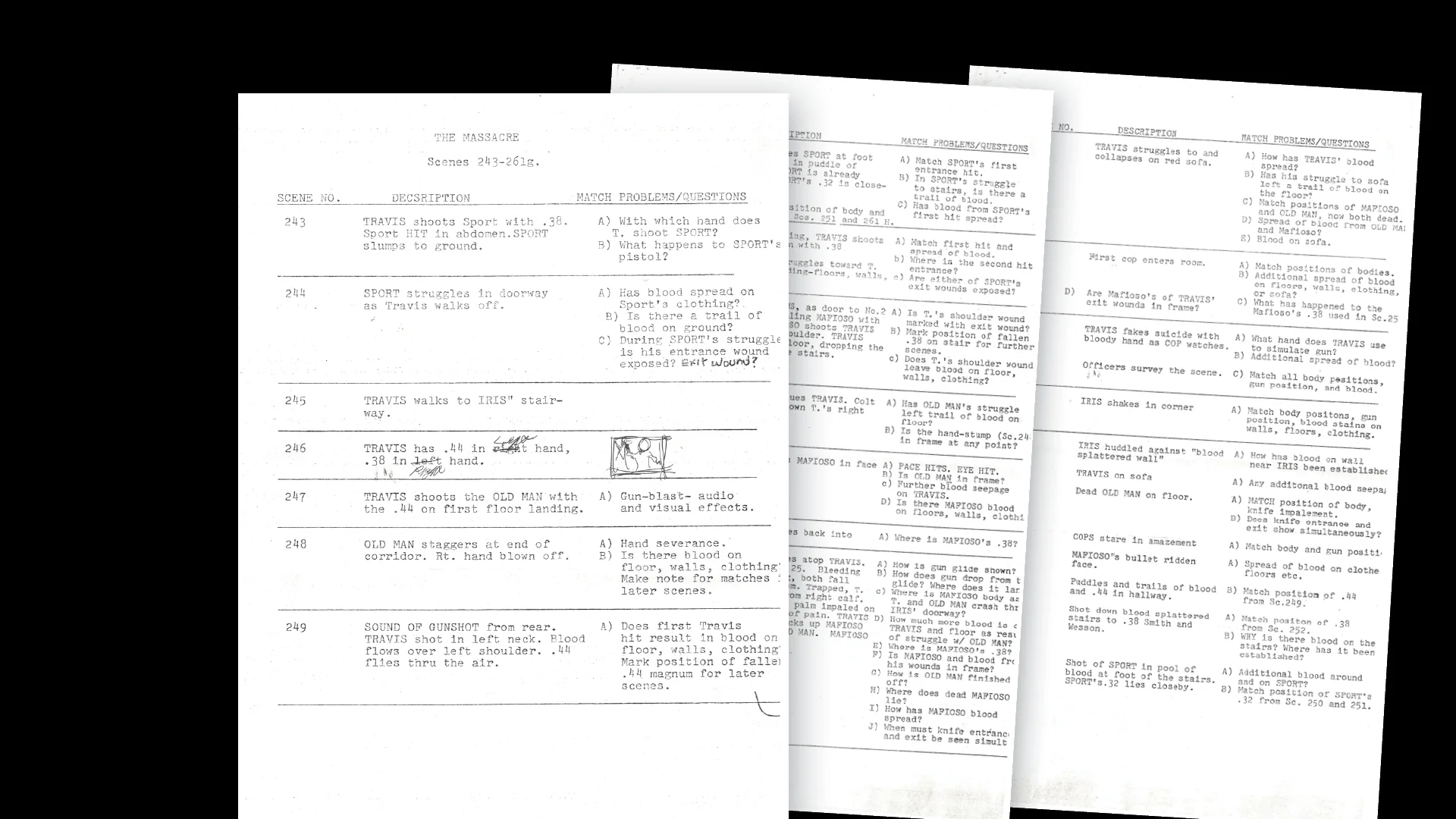
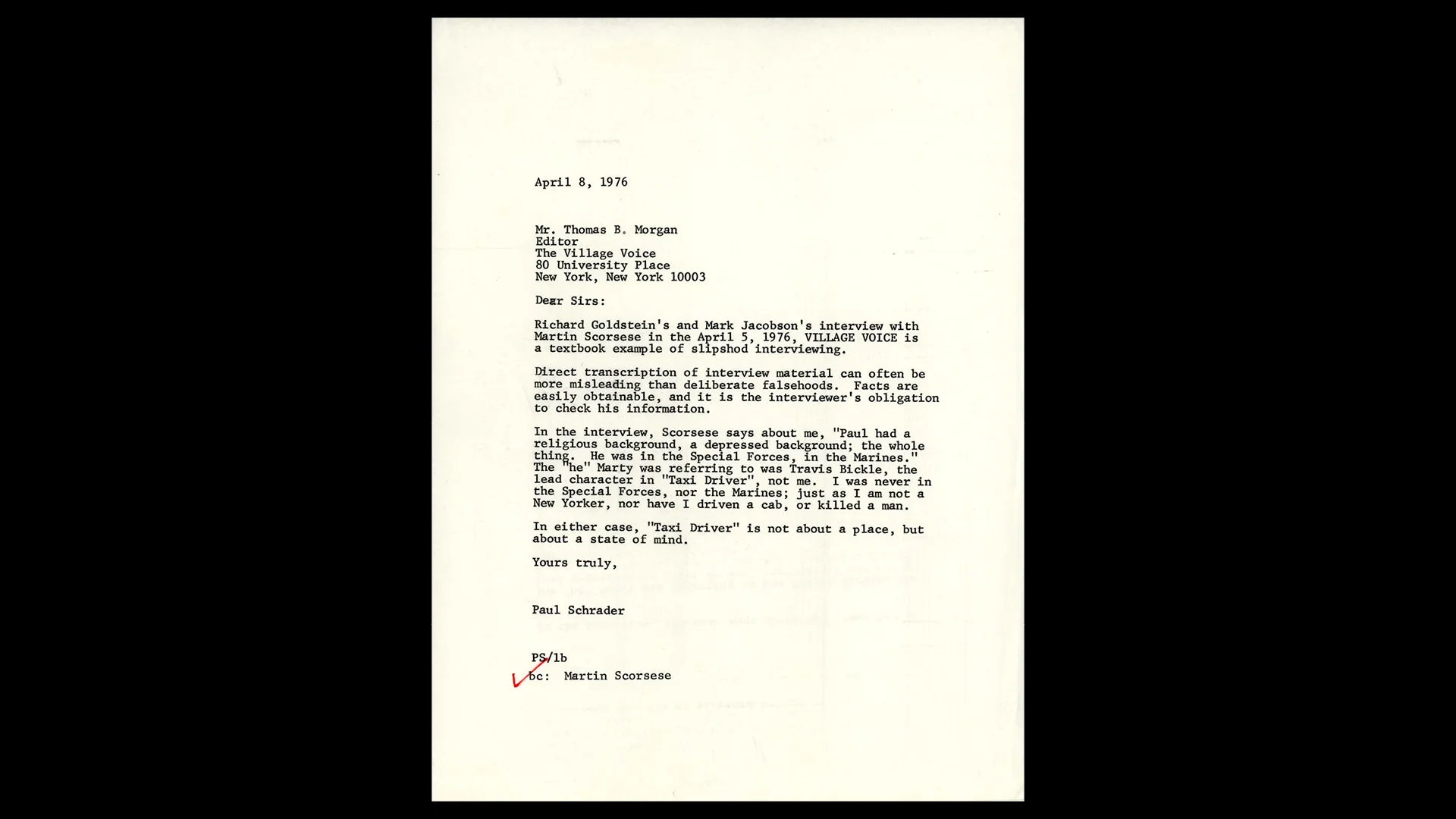
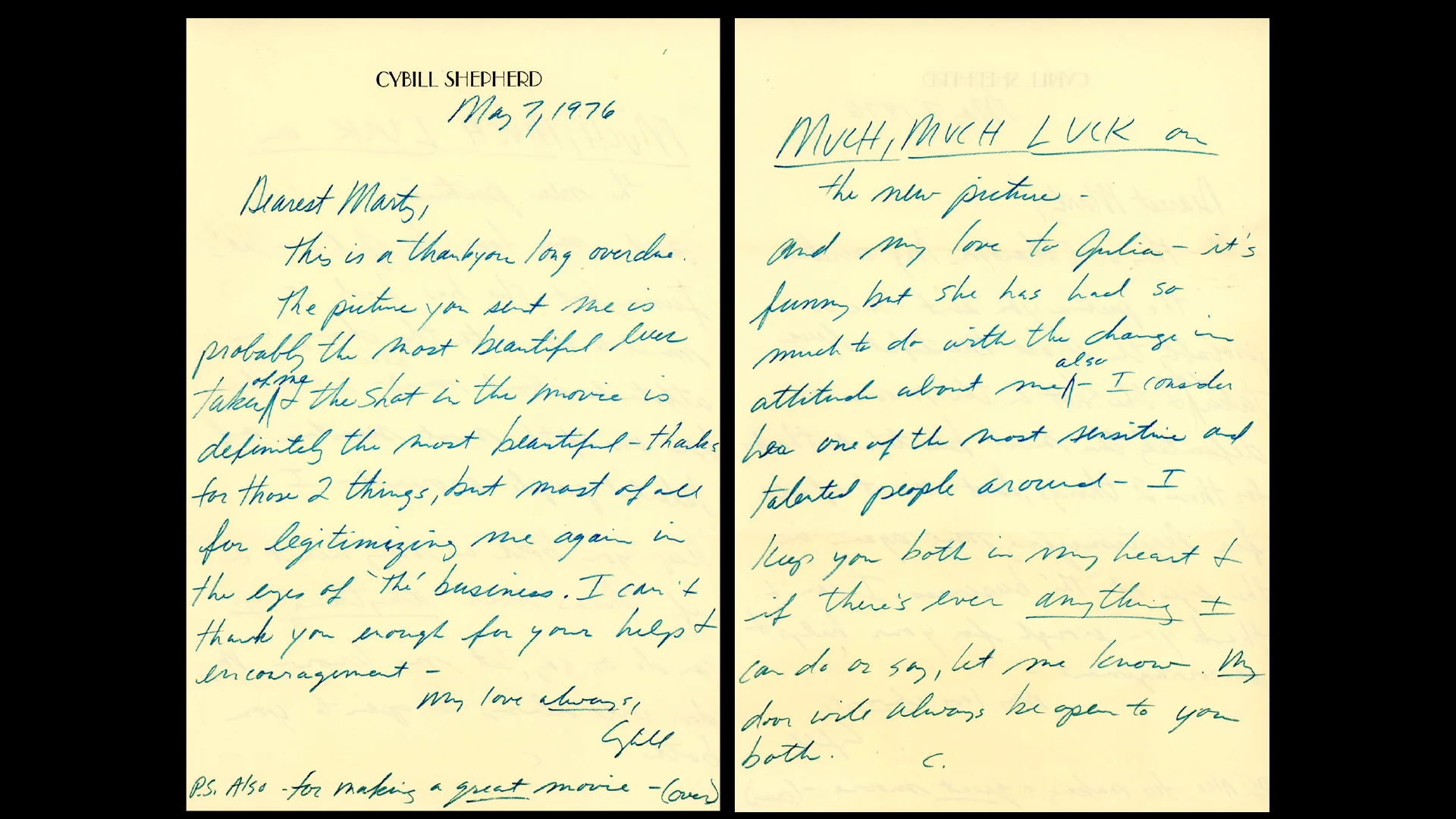


As illustrated in the gallery of images above, the AFI Archive’s Martin Scorsese Collection documents the pre-production, production and post-production phases of TAXI DRIVER with early scripts, architectural drawings, call sheets and Scorsese’s notes from the first screening. These primary sources complement and contextualize AFI’s documentation of TAXI DRIVER in the AFI Catalog database.
AFI’s production history of TAXI DRIVER dates to the early 1970s,
when writer Paul Schrader had just graduated from the AFI Conservatory’s inaugural class, along with a group of notable filmmakers that also included Caleb Deschanel, Terrence Malick and Tom Rickman. According to Scorsese, Brian De Palma brought Schrader’s script to his attention in 1974. This timeline is confirmed by the AFI Archive’s Martin Scorsese Collection, which includes annotated and revised versions of Schrader’s TAXI DRIVER scripts from that year (see above). However, the literary rights had been optioned one year earlier by producer Julia Phillips and her husband/business partner, Michael Phillips, as reported in the AFI Catalog. Around this same time, Julia Phillips was accepted into AFI’s first DWW+ cohort (then known as the AFI Directing Workshop for Women) and became the first woman in history to win a Best Picture Oscar® for producing THE STING (1973) with Phillips and Tony Bill.
Listen to clips from the AFI Archive
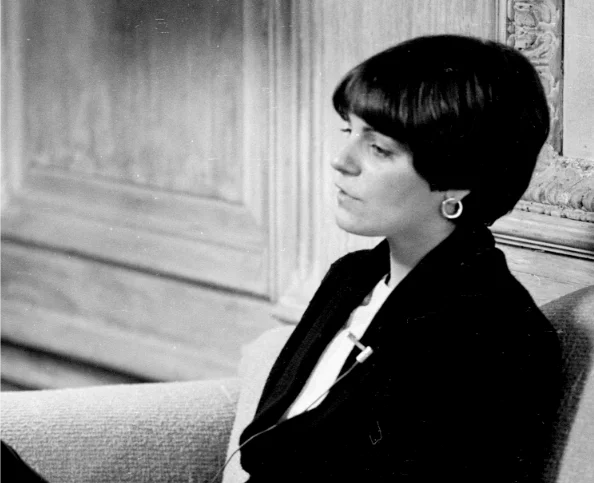
According to a TAXI DRIVER press release found in the AFI Archive, Julia Phillips’s early forays into filmmaking were followed by important assignments at Columbia Pictures that were rarely granted to women of her era, including a producer credit on Steven Spielberg’s CLOSE ENCOUNTERS OF THE THIRD KIND (1977) and a promised director role for Columbia’s ill-fated adaptation of Erica Jong’s 1973 novel “Fear of Flying.”
Shortly after the release of TAXI DRIVER, Julia Phillips spoke candidly to young filmmakers at the AFI Conservatory about her experiences making the picture, calling it “very difficult” and a “labor of love for the people involved.” On February 11, 1976, Scorsese provided a brief introduction to a screening of the film at AFI, and then in April, Paul Schrader visited AFI to discuss TAXI DRIVER with Fellows of the Conservatory.

During Schrader’s seminar, he provided insights into the character of Travis Bickle, indicating that his worldview was based on fear, which is manifested as racism and violence. The audio recordings and corresponding transcripts of these seminars are contained within the AFI Archive.
The Scorsese Collection
was deposited with AFI in 1986, a decade after TAXI DRIVER was released. The collection includes materials related to his activities from 1971 to the late 1980s. Aside from TAXI DRIVER, the collection at AFI also showcases information from Scorsese’s early films, including features like BOXCAR BERTHA (1972), MEAN STREETS (1973), ALICE DOESN’T LIVE HERE ANYMORE (1974) and subsequent works. Some of the notable content related to TAXI DRIVER includes script drafts with previously noted annotations, as well as sketches by Scorsese, along with correspondence related to the production and public reception of the film, storyboards, scene breakdowns, marketing materials and more.
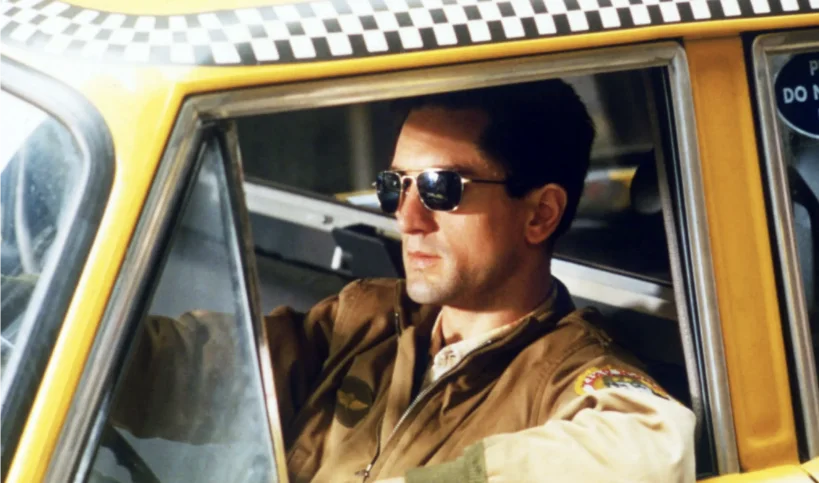
“TAXI DRIVER is not about a place, but about a state of mind.”
– Paul Schrader
Letters within the Scorsese Collection shed light on key aspects of Jodie Foster’s casting, while correspondence from Paul Schrader and Cybill Shepherd provides additional context for the film’s development and reception. As a whole, the materials in the collection serve as a gateway for historical research and new avenues of film scholarship.
To learn more about the AFI Archive, the Scorsese Collection and other collections, please visit this page.

The AFI Archive is an ongoing program which adds countless new items each year, including exclusive conversations with acclaimed filmmakers and performers captured at AFI, and is on the forefront of state-of-the-art digitization efforts ensuring the stories of today are protected for future generations.
Support the AFI Archive and AFI Catalog to protect the history of film.
Comments (2)




Donate today and join the nation’s strongest community of film lovers.
AFI is a 501c3 non-profit advancing the art of the moving image by empowering storytellers and inspiring audiences

Randall Sekon
This is so absolutely FANTASTIC. Reading these materials, seeing the historic documents, the personal notes, the comments from various players, the photos…it’s all given be goosebumps. It’s a “time stamp” for me. And transports me to the time when I first “experienced” TAXI DRIVER at the cinema where I worked. It changed my life. And “lit my fuse.” I knew that I wanted to get in to filmmaking. And it was this film that did it. Wow. Thank you.
Art Kopp
Thanks Great Films