




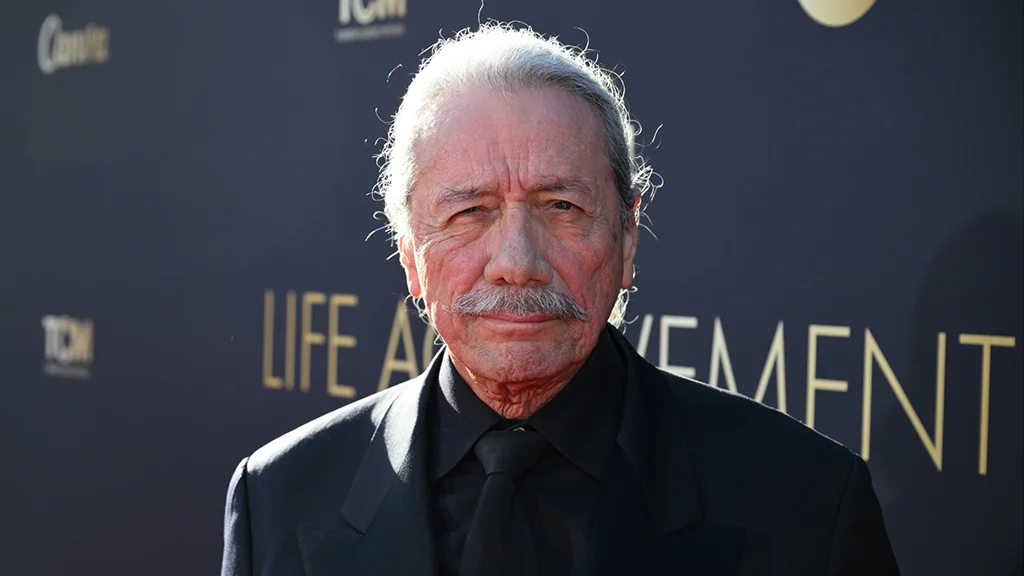
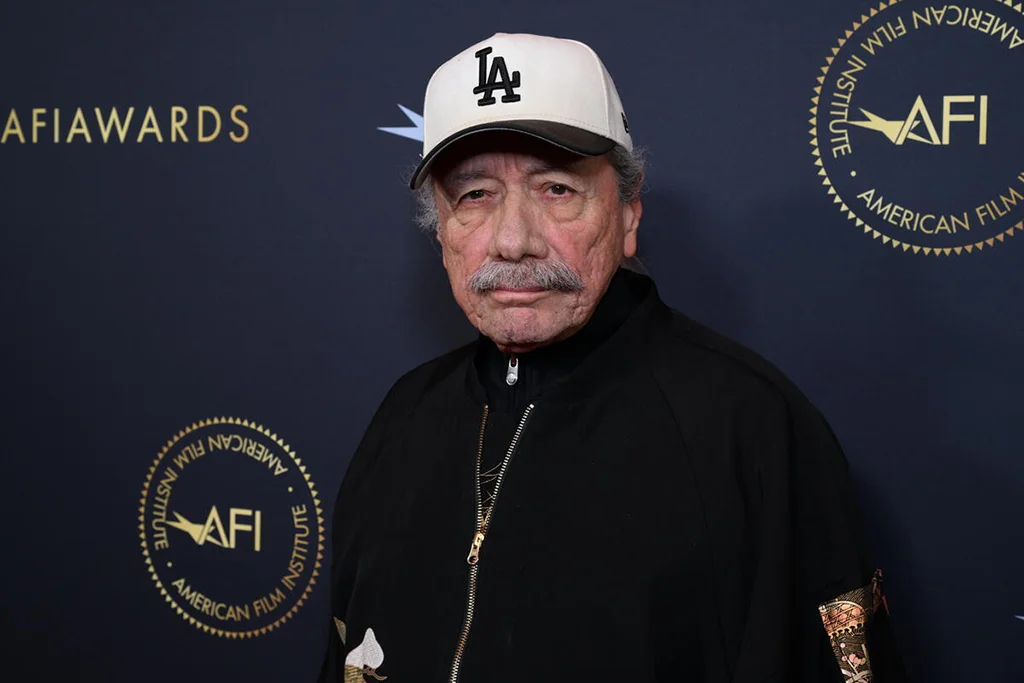
In honor of National Hispanic Heritage Month, AFI spoke with Trustee and longtime Member Edward James Olmos about his decades-long commitment to storytelling, his journey with AFI and the importance of creating opportunities for underrepresented voices. Read the interview to hear his reflections on the power of film and the importance of telling your own story.
October 1, 2026
Protected:
AFI Member Spotlight: Edward James Olmos
AFI: Given your decades of work building platforms for underrepresented voices — from co-founding the Los Angeles Latino International Film Festival (LALIFF) to your work with Latino Public Broadcasting — what initially drew you to the mission of the American Film Institute, and what compelled you to deepen that commitment by joining the Board of Trustees?
Edward James Olmos: I think the single most important part of this life is to give more than you receive, and the industry has been a privilege to be a part of. I’ve really appreciated the art form, and no one is trying to increase the understanding of the art form more than AFI. The American Film Institute is truly a gift to our understanding of filmmaking.
Filmmaking, to me, is probably one of the most important art forms that humans have ever created. It reaches the subconscious mind, which is saying a lot. There’s no book, no live performance, no song, no other art form that quite matches the audiovisual experience.
In film, you have an art form where everything comes together collaboratively. Many of those collaborators at AFI – or Fellows – that create, they come out of the Conservatory and get Oscars®, receive the highest accolades and make the finest films. So, it was an honor years ago when they asked me to help.
I’ve been on the Board of AFI now for many years, and it’s an honor and a privilege to contribute to its mission. If you look at the Board of Trustees, who they are, you’ll be amazed by the integrity, dignity and passion of its Members.
AFI: As a Trustee of AFI, you help guide an institution dedicated to both preserving the historical canon of American film and nurturing the next generation of storytellers. During National Hispanic Heritage Month, how do you see AFI’s responsibility evolving to ensure that the American film legacy is not only preserved but also actively expanded to reflect the diverse voices that are critical to the future of our industry?
Edward James Olmos: We are diverse. We’re one of the most diverse countries on the planet. We have almost every single language spoken in the world represented here by U.S. citizens. Cultures from around the world are represented here, so we are truly a diverse nation of human beings. To me, that’s what AFI is. AFI does that. It doesn’t pick you by way of your nationality or ethnicity. No. It picks you by way of your artistic endeavor. Whatever your culture, religion or gender, AFI does not define you by those characteristics. It understands you by your artistic endeavor, and only that. The way that we’ve been able to accelerate our understanding is by making sure that our mission and our aesthetic remain solid, and they have since the 1960s, when AFI was created.
I was very grateful that somebody had the smarts to say, let’s build an institution that really celebrates the understanding of what this art form is, and take it to the highest level. It has been an honor and a privilege to be part of this, and I’ve been a part of it for quite a few years now and I will continue till the day I die if they’ll allow me.
AFI: You have maintained a powerful balance between being an actor and an activist for decades, advocating for causes like diabetes awareness, Latino visibility and educational equity. How do you decide which social causes to lend your platform to, and do you feel your work in film is the most effective tool for that advocacy?
Edward James Olmos: It’s not that you decide. It’s a matter of understanding the needs of the moment. Some days I’ll wake up and somebody will call me and say, “Listen, we need your help and your voice to support this.” The understanding is that the more I share, the more I give. Even this conversation makes me stronger, because I’m exploring myself, my understanding, I’m sharing with you, I’m helping you understand what you need to understand, and by that, you’re asking me about myself and I have to know about myself and give myself to you. Therefore, I get stronger and stronger and stronger. That’s really the key.
AFI: STAND AND DELIVER continues to hold a profound place in classrooms and culture. As a champion for community education, what do you believe is the most critical lesson for the next generation of Latino creators as they seek to build their own legacies in Hollywood?
Edward James Olmos: You have to stand true to your passion. If your passion is to become rich and famous, then that’s the path you’ll pursue. But if your passion is to be a storyteller, then tell your story. Don’t tell somebody else’s story. Tell your own story.
Why do you think I learned how to direct? Why do you think I learned how to produce? Why do you think I learned how to act? Why do you think I learned… I used to be a rock and roll singer. And I was good, yeah, I wasn’t a good singer, but I was a good performer, real good.
And be the best that you can be. I’m not talking about being better than other people. Don’t make that your driving force. I wanna be better than these people. I wanna be better than that guy. I wanna be better than this. That’s a really ugly way to live your life. Instead, try to do something better today than you did yesterday. As a human being, first and foremost, that’s what matters.
Once I learned to give, everything changed for me. All I have to do is share and give to people. As soon as you become a person who gives, you’ll gain a deeper understanding of who you are as a human being.
AFI: You have famously expressed an ambitious philosophy about your life and work, aiming to continue creating for decades to come. Looking at your current projects and future goals, what keeps that creative spark and drive alive, and how will you continue to champion film and the arts?
Edward James Olmos: When you give yourself to others, you find yourself, and that gives you the drive to be creative. And that’s when you become really, really strong. Nobody came out of their mother’s womb bouncing a basketball. Nobody came out of their mother’s womb playing an instrument. Nobody came out of their mother’s womb saying, “To be or not to be.” Most of us learn our craft. And if we have passion, we can discipline ourselves to do the things we don’t want to do. Then we will have the discipline to do the things we want to do, even when we don’t feel like it. That’s what makes an artist.
Comments (0)

Donate today and join the nation’s strongest community of film lovers.
AFI is a 501c3 non-profit advancing the art of the moving image by empowering storytellers and inspiring audiences
