




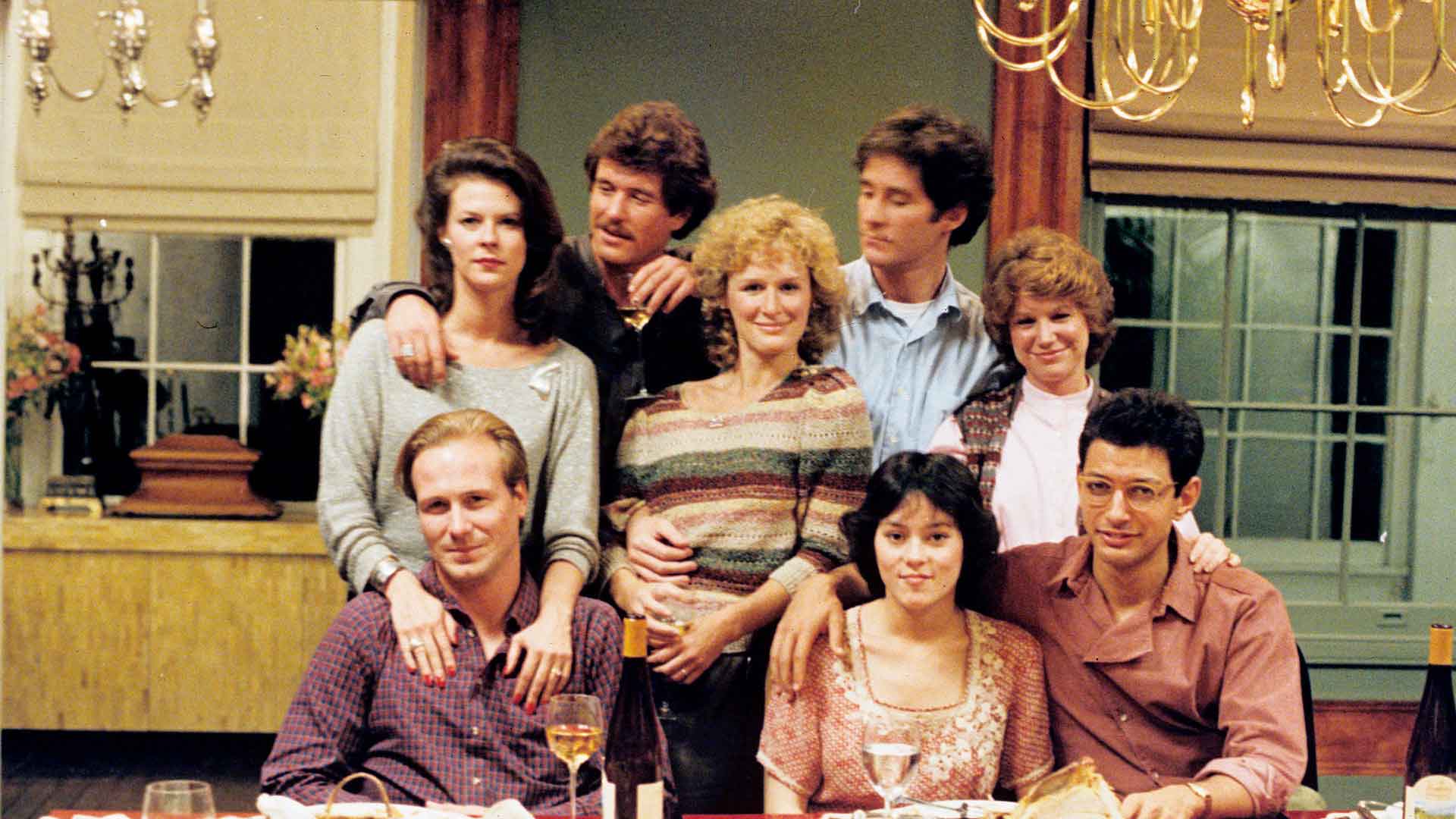
This September, in the remaining summer heat, the AFI Catalog cools down by spotlighting THE BIG CHILL, which was released 40 years ago this month. Included on AFI’s 100 YEARS…100 SONGS list for its use of The Temptations’ version of “Ain’t Too Proud to Beg,” THE BIG CHILL achieved vast success at the box office as well as with its soundtrack album, released by Motown, that charted at the peak position of 17 on Billboard Magazine’s top 200 in 1983. Surpassing SATURDAY NIGHT FEVER (1977) as the longest-charting movie soundtrack at the time, it was critically important in reviving Motown and remains today a six-time Platinum record. AFI Honorary Degree recipient Lawrence Kasdan, who was then known for co-writing blockbuster films such as THE EMPIRE STRIKES BACK (1980) and RAIDERS OF THE LOST ARK (1981), and for making his directorial debut with BODY HEAT (1981), collaborated with newcomer Barbara Benedek on scripting THE BIG CHILL five months after the release of John Sayles’ RETURN OF THE SECAUCUS 7 (1980), a film that also portrays a reunion with an ensemble cast. Kasdan stated that the movie inspired him to revisit his ideas for THE BIG CHILL, which he came up with years earlier. The story was semi-autobiographical—like his characters, Kasdan was a political activist at the University of Michigan—but as time passed Kasdan noticed his peers expressing apathy and cynicism toward the ideals they honed in college. He described the sensation of observing these detractors as “a physical chill that would pass through my body. I started calling it ‘the big chill.’”
Protected:
THE BIG CHILL’s 40th Anniversary – AFI Catalog Spotlight
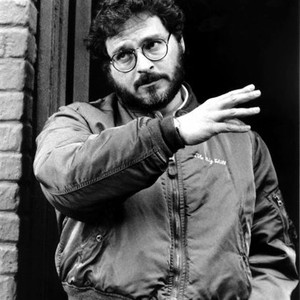 Kasdan also experienced a similar “chill” of disillusionment from the icy reception the script received in Hollywood. The Ladd Company, which produced BODY HEAT to great success and had initially contracted Kasdan to direct THE BIG CHILL, turned its back on the property. All major studios rejected the project, and despite efforts from producer Richard Fischoff at Paramount to get it made, executives could not be convinced that an adult-themed story would be attractive to mass audiences. Fischoff brought the script to Marcia Nasatir, who had become the first female vice president of production at United Artists several years earlier. When her colleagues left the studio to form Orion Pictures, she joined them but was refused an equal partnership and moved on the become president of Johnny Carson’s new company, Carson Productions Group, Ltd. There, Nasatir launched THE BIG CHILL as the studio’s first film, but she soon left her position and was replaced by Richard Fischoff, who ironically wanted to produce the picture at Paramount years before. Columbia came on to distribute and achieved its biggest hit that year.
THE BIG CHILL marked an important launching point in the careers of its actors, catapulting them into superstardom. While Kasdan wrote the role of Nick for William Hurt, the star of BODY HEAT, the other parts were cast with performers who were toward the beginning of their careers. 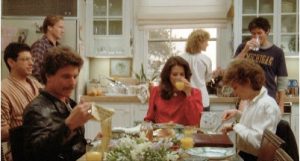 During rehearsals, the ensemble cast of Glenn Close, Tom Berenger, Jeff Goldblum, JoBeth Williams, Meg Tilly, Kevin Kline, Mary Kay Place and William Hurt lived together in a condominium complex where they shared meals and played late-night games of charades and Trivial Pursuit, so by the time filming began they already shared a sense of friendship and intimacy. The film takes place over the course of one weekend, following the reunion of college chums that convene for the funeral of their friend Alex, who committed suicide. Kevin Costner had been hired to play Alex in flashback sequences, but they were cut from the final film. Shooting mainly took place on location at Tidalholm, an 1853 antebellum estate in Beaufort, South Carolina.
Produced on a budget of approximately $8 million, THE BIG CHILL went on to earn over $53 million (or over $160 million today), making it a huge commercial achievement. It was popular with critics and was honored with three Oscar® nominations for Best Picture, Best Screenplay and Best Supporting Actress (Glenn Close). Unlike other films about youth activism in the late 1960s, which continued to champion their causes, THE BIG CHILL reflected another perspective in which liberal idealism proved to be superficial over time, when the realities of adult life—work, marriage, children—demanded other priorities. In the film, Vietnam veteran Nick, who was rendered impotent from his war injuries, reminds his friends that Alex represented their lost idealism, and that by mourning his suicide they are actually coming to terms with their own political impotency. This message strongly resonated with audiences in the Reagan era, with their roots in 1960s culture, questioning how the generation of radicals and hippies became conservative Republicans. As noted by Kasdan, the film “deals with members of my generation who have also discovered that not everything they wanted is possible, that not everything ideal they believed has stayed in the forefront of their intentions. THE BIG CHILL is about the cooling off process that takes place for every generation when they move from the outward-directed, more idealistic concerns of their youth to a kind of self-absorption, a self-interest which places their personal desires above those of the society or even an ideal.”
However, the honest and deeply moving depiction of friendship in THE BIG CHILL may have transcended this context for its audiences, and its recognition of the power of camaraderie, especially during hard times, could have been an even greater reason for the film’s success. THE BIG CHILL shows the monumental sacrifices friends will make for each other’s happiness, including a scene in which Sarah (Glenn Close) asks her husband to impregnate her best friend. At the end of the film, when the friends prepare to go back to their regular lives, Michael (Jeff Goldblum) jokes that they all voted to never leave, underscoring the closeness they achieved during their weekend together. Combined with a blockbuster soundtrack and an ensemble of talented actors, THE BIG CHILL remains today an embodiment of American culture in the 1980s and a touchstone of the decade in filmmaking.
Watch THE BIG CHILL trailer:
Where to watch THE BIG CHILL:
Watch Lawrence Kasdan accept his AFI Honorary Degree:
About the AFI Catalog
“No other source of information is as complete and accurate, and no other source is produced with the scrupulous level of attention to scholarship and research as the AFI Catalog.” – Martin Scorsese
Moving images remain one of the most popular mediums in which individuals from all walks of life join together with a common passion for seeing our stories come to life. With extensive scholarly research compiled over the past fifty years, and an updated technological platform for enhancements in the future, the AFI Catalog database provides a uniquely robust, dynamic portal into film’s rich documentation of cultural history and personal narratives.
Explore the AFI Catalog at https://aficatalog.afi.com/.





Dennis Carson
Although my age group was about 10 years younger, i related to the film and characters on a personal level. In 1985 with friends in Cancun we were approached and asked why we were playing the soundtrack with songs before our time. We replied that good music is good music and The Big Chill had made an impression on us.