




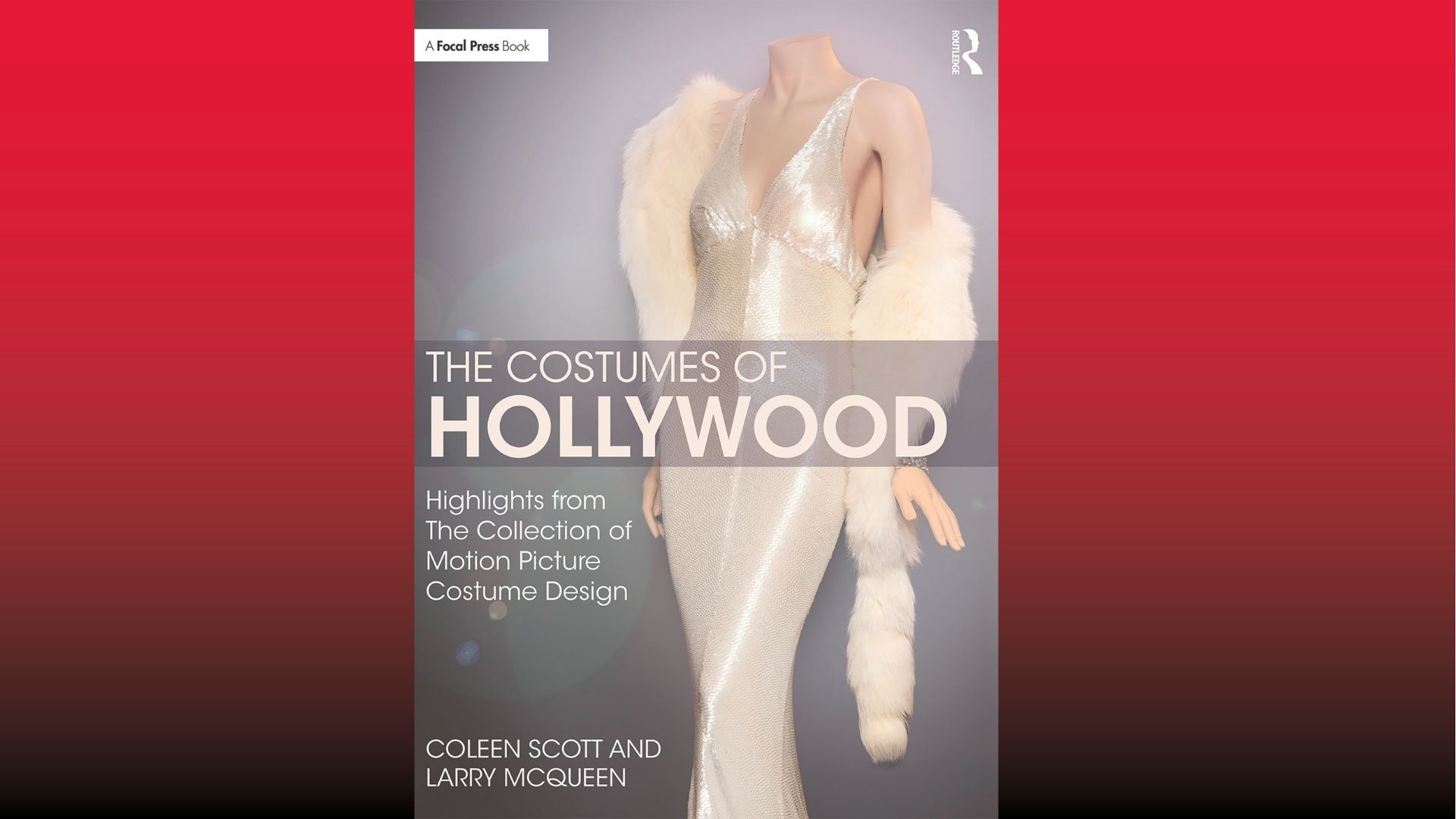
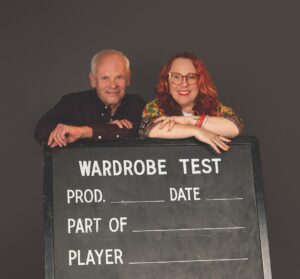
This month, we spoke with AFI Premiere Circle Member Larry McQueen and his co-author, costume designer and historian Coleen Scott, about their brand new book, “The Costumes of Hollywood: Highlights from The Collection of Motion Picture Costume Design,” available now online and in stores.
A leading costume historian and archivist, McQueen has consulted for major auction houses including Camden House, Christie’s East in New York and London, Butterfield & Butterfield, Entertainment Rarities and Julien Entertainment – authenticating and valuing some of film history’s most iconic wardrobe pieces. From 1999 to 2012, he served as an archivist for MGM/UA, helping preserve the studio’s legendary props and costumes.
We spoke with McQueen and Scott about supporting AFI, their shared passion for Hollywood costume history – and, for fun, which iconic looks they’d choose to wear themselves.
AFI: What brought the two of you together to create “The Costumes of Hollywood: Highlights from The Collection of Motion Picture Costume Design,” and what did you each bring to the collaboration that made it work so well?
Coleen:
We first connected through a Costume Society of America “Dress and Drinks” event hosted by Leon Wiebers during COVID, where Larry was interviewed. I was fascinated by the incredible pieces he showcased – I just had to know more. So I reached out, and that’s where our collaboration began. At first, we just hung out and talked about costumes. I did ask early on if he’d ever thought about doing a book, but we spent a long time in conversation before it became a real project.
What I brought to the collaboration was my experience – I’m a costume designer, an educator and I had already published a book on burlesque costume history.
Larry:
When Coleen asked if I’d ever thought about writing a book, I was nervous. It came as a surprise that people were interested in hearing from me – I hadn’t thought much about why I did what I did; I just did it. After working so long on something, it just becomes what you do – you love it and you keep going. But through this collaboration, Coleen helped pull out of me the “why”– why I collected certain pieces, how I cared for them and how I exhibited them. It was almost therapeutic.
The trust we built over time was essential. We had different styles, backgrounds and experiences, but underneath it all we were both costume nerds. That shared passion really made the collaboration work.
AFI: The book showcases more than 100 original film garments. How did you decide which pieces to feature?
Coleen:
It was a painful process! We started with Larry listing what he thought should be in the book, but of course, we couldn’t include them all due to space and word count constraints.
So we had to think critically about how to group and present them. The chapters were then built around Larry’s “dream” exhibition themes rather than a strict chronological order. There are over 650 film costumes in the collection, and from over 300 pieces in his original list, we narrowed the selection to under 150 before we started writing – and eventually cut down to just over 100.
Larry:
It became clear to us that it was no longer just about the collection, but rather about what would make the best book. That shift in thinking – along with Coleen’s guidance and my trust in her – helped shape the final vision.
AFI: With over 300 images and so many rarely seen details, how did you approach the visual storytelling of the book as part of its narrative throughline?
Coleen:
We organized the book around those thematic exhibition categories, which aligned with how Larry and Bill Thomas had curated the collection from early on. From there, we presented the chapters chronologically from the 1920s to present day.
As a costume historian, I felt strongly about including interior views and close-ups. So many costume books don’t show those details, and showcasing the interiors is incredibly valuable for historians, designers and makers. That led to our final chapter, “Inside Out,” which gave us space to explore those more hidden, intricate views and include some pieces that didn’t fit elsewhere.
Larry:
That chapter was also a way to show pieces that could’ve belonged in multiple categories or didn’t make it into the earlier sections. And Coleen’s vision really pushed us to elevate this from just being a coffee-table book to something informative and intimate.
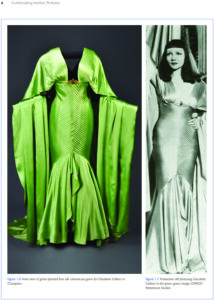 AFI: Larry, your collection spans decades – how has your relationship to these pieces evolved as you’ve preserved, researched and now published them?
Larry:
When I first started collecting, I had no idea where it would lead. Back in the ’80s and ‘90s, I’d find film costumes in secondhand shops being sold as Halloween outfits. Even then, I knew that they were too well-made, too wonderful and too significant to be treated that way.
I met Bill Thomas (not Bill Thomas the costume designer) – my future business partner – when we were both young, and he was working with the group helping Debbie Reynolds collect Hollywood costumes. I had an advanced degree in technical theater, so I appreciated costumes, but our conversations were what taught me how to spot studio-made garments: the construction, the labels and the details.
Bill stopped collecting at one point because of some negative experiences with that early group working with Reynolds. Eventually, after some convincing, Bill and I started buying pieces together and that grew into a shared business of appraising, wardrobe processing and collecting from 1989 – until Bill passed away in 1995. During that time, he taught me how to research and authenticate costumes and I focused on preserving them with care and respect. It was Bill’s final wish that I continue our work building and promoting the collection. In 1999 I took a position at the MGM studio archives until it was abruptly (and heartbreakingly) closed in 2012, at which point I focused on The Collection of Motion Picture Costume Design full time.
For me, it was always about so much more than just collecting – it was about honoring the history, designers, craftsmanship and artistry behind each piece.
AFI: Coleen, as a historian, what surprised or excited you most during the process of working with Larry’s collection?
Coleen:
What really moved me was Larry’s philosophy and recognition of the designers and craftspeople behind the physical pieces, which resonated deeply with me as a costume designer and educator.
Additionally, his dedication to recreating missing accessories for exhibition – always with respect and clarity about what’s original – adds a theatricality that elevates the presentation of the costumes for the viewer.
AFI: What do you hope the next generation of costume designers, film students or collectors will take away from “The Costumes of Hollywood?”
Larry:
I hope readers will come away with a greater respect for costumes, designers, and craftspeople as well as collectors. The book is meant to create a visual journey that shows how a collection of this size was built and curated over decades, against various odds – and each costume tells a story of Hollywood’s history. I hope readers will also see that collecting can be about passion and preservation, not profit.
Coleen:
I hope people understand that this is a unique and irreplaceable collection of cultural history. It’s historically significant both because of the scope and because it was curated with a mission that it be shared with the public. Ideally, someone will read this and see the value in preserving the collection as a whole. With the right support, The Collection of Motion Picture Costume Design can continue to grow, be accessed for research, participate in global museum exhibitions and even stand alone as a future institution for the next generations to enjoy.
AFI: Larry, as both a longtime archivist and a supporter of AFI, why do you feel it’s important to champion film organizations like AFI?
Larry:
Thank goodness for organizations that preserve the history of Hollywood. This industry isn’t known for looking back – it’s always about the next blockbuster, the next big thing. But groups like AFI remind us where it all began and who built it. My collection, like the industry itself, didn’t appear overnight – it was built over years by incredibly talented people. It’s important to have organizations that reflect on the past, celebrate what deserves to be honored and help keep that history alive. I only wish there were more like them.
AFI: Just for fun – if you could “borrow” any costume from the collection for a day, which one would you wear and where would you wear it?
Coleen:
I know Larry’s rules, so this is completely hypothetical, but if we’re pretending that I could wear anything I wanted, I’d pick the Liza Minnelli gown from New York, New York. It has an iridescent sequin bodice with a dramatic pleated red and pink organza train – like twelve feet long. I love it because it’s theatrical and fabulous, and I would likely wear it for a burlesque event or performance.
Larry:
And I absolutely would not wear anything! From day one, I never wanted to wear the pieces. In fact, I saw firsthand the damage that happened when people wore them in fashion shows. These costumes are too fragile, too important to risk ruining them. That’s why the book exists – so people can admire them while keeping their condition and the history intact.
Photo credits: Ben Trivett




Cinda Lou RAUPE-HULTNER
Inspiring interview. The book is fantastic. Well written and beautiful.